Council’s letter expresses concern for heightened risk of oil spills in the region; requests government partners to take all possible action to address risk
||| FROM SAN JUAN COUNTY COMMUNICATIONS |||
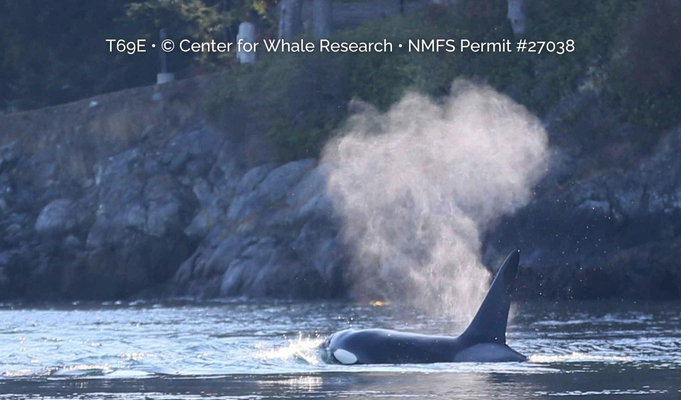
From Lime Kiln Park on the west side of San Juan Island, you can often spot the tall black fins of our resident Orcas. Increasingly, those remarkable animals are silhouetted against a large oil tanker. Like the Orca, the tankers come from Canada then pass through the narrow channels of the Salish Sea on their way to the ocean.
The San Juan County Council is concerned about increased oil tanker traffic and the heightened risk of oil spills. Canada is building pipelines and shipping terminals to deliver tar sands oil to global markets. It has already expanded its Transmountain Pipeline, including its extension to US refineries near Bellingham, and deepened its harbor shipping channels to accommodate more heavily loaded ships. These expansions have tripled the number of tanker transits since 2016. On July 1, Mark Carney, Prime Minister of Canada, and Danielle Smith, Premier of Alberta, announced that Canada plans to build an entirely new pipeline in the existing corridor. The new proposed pipeline will terminate at Roberts Bank, seven miles from the US border. If the pipeline is built, seven times the number of tankers will pass through the narrow shipping lanes west of San Juan Island by 2034.
Oil tanker shipping lanes from greater Vancouver, BC, follow the aptly named Boundary Pass north of Orcas Island to Turn Point on the northern tip of Stuart Island and then pass through Haro Strait along the western shore of San Juan Island before finally entering the Pacific Ocean through the Strait of Juan de Fuca. The most hazardous part of the journey is at Turn Point where the shipping channel narrows to under two miles across. The oil tankers navigating there are up to three football fields long and carry up to 800,000 barrels of liquid cargo. An increasing amount of that cargo is heavy crude oil called dilbit or dilute bitumen. Dilbit sinks if spilled; in the event of an accident, it will be much harder to clean up.
Our shorelines, kelp beds and seagrass meadows, fisheries and cetaceans including the endangered southern resident orcas, and our tourist-dependent economies are all on the line, on both sides of the border. A catastrophic oil spill could ruin the biologically rich ecosystem that we all benefit from and enjoy. Without the best available protection, the risk is not limited to our county; other communities that border the Salish Sea are also exposed and vulnerable. Protecting our shared environment is critical not just to the iconic Orea but to our entire way of life.
The risk and consequences of an accident cross the international border affecting British Columbians and Washingtonians alike. Our two countries have a history of cooperation and planning to prevent and respond to shipping accidents. The United States and Canada already operate a joint vessel traffic management system and coordinate responses to spills. Prompted by Canada’s July announcement about building a new pipeline that would double the throughput of heavier-than-water Alberta tar sands oil, Congressman Rick Larsen, who represents our region and is the leading Democrat on the House Transportation and Infrastructure Committee, wrote on July 27, 2026, to the Commandant of the US Coast Guard for answers on how the new Alberta to British Columbia pipeline will impact the Salish Sea and local marine habitats. He said during a Congressional Hearing, “Due to Canada’s plans to ship more oil in the Salish Sea, the Coast Guard’s oil spill prevention and response mission in the Pacific Northwest is even more critical. The Coast Guard must immediately begin prevention planning through the Canada-United States Joint Marine Pollution Contingency Plan. “
Good intentions are a start, and we also need actions to protect our environment, economy, and way of life. As stewards of this precious ecosystem, it is incumbent upon us to take all possible action to address this growing risk more comprehensively. First, we must place concerted pressure on US and Canadian industry and provincial, state and federal governments in Canada and the US to establish the capability to mitigate and remediate dangerous heavy crude oil spills. It is essential that the necessary education, training and equipment is secured to prepare for a potential heavy oil spill and ensure a rapid response to prevent what would be a catastrophic disaster in the Salish Sea.
Next, we must bolster our years’ long efforts with our many Canadian and US partners to secure a quick-response rescue tug near Haro Strait, like the emergency rescue towing vessel (ERTV) at Neah Bay which is supported through a partnership between the State of Washington and the oil refining industry. This oil spill prevention resource responds to ships going to and from Canada as well as the United States. Over 25 years, the Neah Bay vessel responded to ninety-five vessels in need of assistance, including twenty-eight in Canadian waters. Neah Bay is over a hundred miles from the narrow channel at Turn Point, a journey that can take up to six hours. An ERTV is needed in closer proximity with more rapid response times.
The risks associated with the new Canadian pipeline and its transportation projects need to be addressed comprehensively, holistically, and bilaterally. The residents of San Juan County need Governor Ferguson, Congressman Larsen, and our other elected local, state and federal leaders to engage with their Canadian partners and the US Coast Guard to help ensure that every risk reduction and safety measure is procured. The voices of our community will be critical to the success of our joint advocacy efforts on this increasingly time sensitive issue.
In solidarity,
- Kari McVeigh, District 1
- Justin Paulsen, District 2, County Council Chair
- Jane Fuller, District 3

**If you are reading theOrcasonian for free, thank your fellow islanders. If you would like to support theOrcasonian CLICK HERE to set your modestly-priced, voluntary subscription. Otherwise, no worries; we’re happy to share with you.**




I don’t like the wording “capability to mitigate and remediate dangerous heavy crude oil spills.” We should be trying our utmost to PREVENT them. And because Canadians are the ones who will benefit from shipping this dilbit, they should be the ones to pay for this prevention, not us.
Thanks to Council for this statement. A 7x increase in tanker traffic is insane. Expanding anything related to fossil fuels is insane.
Even worse, most of this oil – some of the nastiest on the planet, originating from Canadian tar sands sludge in Alberta – is going to distant buyers in Asia, increasing its GWP (global warming potential) due to the long-distance shipping-related emissions of the tankers themselves. The same goes for Canadian coal exports from the Roberts Bank export terminal, whose lights are visible on many evenings just off the north shore of Orcas.
The US hasn’t been a good neighbor to Canada lately, and this is putting domestic political pressure on the Canadian government to diversify their economy away from the United States. But the Trans Mountain Pipeline debacle goes back many years, long before Trump started running his mouth. Canada is clearly in the wrong here, and they’re not only taking their country in the wrong direction, they’re also doing harm to the state of Washington and the planet as a whole.
Any such disaster that affects the San Juans will be blood on the hands of Canadians. That includes not only the government of Alberta, which has long been notorious for using fossil fuels as an economic weapon, but also Justin Trudeau, who nationalized (and therefore saved) the Trans Mountain Pipeline when it seemed likely to be blocked after years of protests and spiraling cost overruns, and Mark Carney, an otherwise logical person who seems to be stuck in the unenviable position of keeping Canada’s economy from imploding due to pressure from the MAGA Maniacs down south. “Drill baby drill” is a Canadian mantra too.
No one person can set this ship on the right course, certainly not anyone reading these words, but do think about your fossil fuel consumption, and your consumption in general, which is largely made possible due to fossil fuels. “Island life” as we know it only exists thanks to the 20 million gallons of diesel fuel which is burned annually by the Washington State Ferry system. Avoid unnecessary online shopping, unnecessary ferry travel, vehicular travel, and air travel, all of which are directly connected to the fossil fuel time bomb that’s blowing up in our faces. Buy a little more time for the people of the future, that’s about all we can do at this point, unless Washington state’s political leadership decides to actually do something about this.