Better, not bigger: Port asphalt production
||| FROM CHIP LONG for PORT OF ORCAS |||
In June we shared an overview of our “Better, Not Bigger” runway rehabilitation project — a partnership between the FAA, WSDOT, and the Port to resurface and reseal the runway, taxiways, and apron, preserving the airport’s current footprint for decades to come. We said we were still working through an important decision about how the asphalt would be produced and delivered. Here’s where we landed.
An Island Solution for an Island Project
This project requires approximately 6,000 tons of asphalt. That’s a lot of material, and how it gets to Orcas Island matters. There’s nothing inherently green about asphalt production, but it can be done in ways that meaningfully reduce the impact on the community and island life.
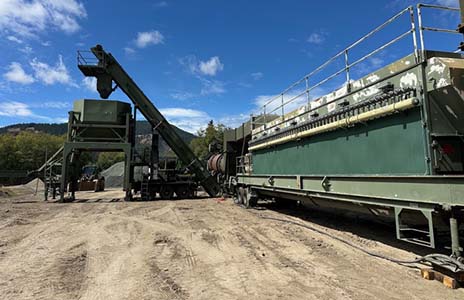
Working with San Juan County, we’ve secured permits to operate a temporary mobile asphalt plant at the Sea Island Quarry for the duration of the project. We looked hard at the alternatives, and local production is simply the most practical and sustainable way to get this done.
A few reasons why:
- Fewer vehicles on the road and ferry. Bringing asphalt from the mainland would have meant hundreds of truck movements across dozens of ferry crossings — on top of normal residential and commercial traffic. Local production means far fewer vehicles competing for ferry space and road capacity during the construction window.
- Lower overall emissions. While the plant itself operates under strict air quality standards, eliminating all that truck and ferry traffic considerably reduces the project’s total carbon footprint compared to mainland sourcing.
- Better schedule reliability. Off-island supply chains come with real risks — ferry delays, weather, production backlogs. With the plant here, we’re working with far fewer variables outside our control.
- Higher-quality pavement. Asphalt is temperature-sensitive. The longer it travels, the more it cools and the harder it is to work with. Fresh material, laid quickly, compacts better and lasts longer.
- Less waste. Shorter transport means less material lost to cooling and handling along the way. As we noted in our last update, the helipad will remain fully open and operational throughout every phase of construction — medical evacuation heli-flights will not be affected.
Our “Better, Not Bigger” project reflects months of careful planning, and we appreciate the community’s patience and support as work gets underway. We’ll keep you informed as things progress.
For full details on construction timing and what to expect during each phase, see the project schedule…
Thank you.
Better. Not Bigger.

**If you are reading theOrcasonian for free, thank your fellow islanders. If you would like to support theOrcasonian CLICK HERE to set your modestly-priced, voluntary subscription. Otherwise, no worries; we’re happy to share with you.**