Orcas Island Fire & Rescue later confirmed that everyone aboard had been rescued and was receiving medical care or being transported from the scene. Kenmore Air said everyone on board has been accounted for.
According to the airline, two injured passengers were taken to a hospital in Bellingham, while two others were transported to Harborview Medical Center in Seattle. Seven additional passengers are being taken to a U.S. Coast Guard base for further evaluation.
The U.S. Coast Guard and local emergency responders responded to the scene.
Kenmore Air said it activated its emergency response procedures and is working closely with the U.S. Coast Guard and local emergency responders. The airline said it is cooperating with investigators and will not speculate on the cause of the accident.
“This evening one of our aircraft was involved in an accident near Sucia Island,” wrote Kenmore Air CEO David Gudgel in a statement. “We are grateful that everyone aboard has been accounted for, and our immediate focus is ensuring our passengers and pilot receive the care and support they need. We extend our sincere thanks to the United States Coast Guard, local emergency responders, and everyone assisting in the response. Kenmore Air is fully cooperating with the investigating authorities, and we will continue providing verified information as it becomes available.”
The cause of the accident remains under investigation.
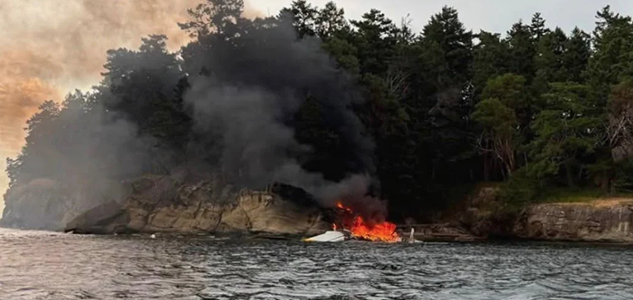
SUCIA ISLAND, Wash. — Emergency crews are responding Thursday to reports of an aircraft down in the water near Sucia Island in San Juan County. A spokesperson for Kenmore Air said the aircraft departed Lake Union at about 4:30 p.m. Thursday en route to Roche Harbor on San Juan Island.
Kenmore Air said the flight was carrying 10 people, while Orcas Island Fire & Rescue initially reported as many as 11 patients could be involved. Both figures are praeliminary.
The U.S. Coast Guard is on scene conducting rescue operations.
Multiple agencies responded, including:
- Orcas Island Fire & Rescue
- San Juan Island Fire & Rescue
- Lopez Island Fire & Rescue
- San Juan County Parks
- U.S. Coast Guard
- San Juan County Sheriff’s Office
Crews are on scene conducting rescue operations.
Officials have not released information about the type of aircraft, the condition of those involved or what may have caused the crash.

**If you are reading theOrcasonian for free, thank your fellow islanders. If you would like to support theOrcasonian CLICK HERE to set your modestly-priced, voluntary subscription. Otherwise, no worries; we’re happy to share with you.**






These responders are heroes. We’re so lucky that everyone survived. Hug the ones you love today and every day.
The real heroes appear to have been the crews of the private vessels moored in that relatively small harbor who reportedly help the passengers and perhaps the pilot get to the safety of their private boats well before emergency help arrived at the crash scene. NTSB will eventually publish an accident report focused mostly on the plane and pilot, but even in the best of cases, it takes the emergency responders 20-30 minutes to get to an unpopulated island crash site.
Well done to all those unnamed vessel owners and crews AND to the emergency responders.
Yes. The recreational boaters were amazing.
This from the Seattle Times:
“When Nathan Butler, a San Juan Island EMS commander, arrived at the crash site, there were more than a dozen recreational boats already there.
About a dozen people helped the occupants of the plane onto a flotilla of three boats they had tied together, Butler said. Boaters performed first aid, bandaging bloody heads and injured limbs, and passed out blankets to keep people warm, Butler said.
“They significantly put themselves out of their own way to help other people, and it did make a difference,” he said.
Emily Johnson, a certified nurse midwife from Shoreline, was one of around six medical professionals who happened to be in the area when the crash happened. She got to the site by borrowing a stranger’s kayak.
Johnson, 33, said boaters converted two vessels into a triage station before authorities arrived. They used foam from life jackets to fashion splints for injured passengers, who suffered concussions, cuts and broken bones, including a broken pelvis.
“This was probably the worst day of a lot of these people’s lives, and it meant a lot that they trusted us to care for them,” Johnson said.
Emergency responders then tied their boats to the civilian flotilla and treated the injured, sending some by boat to the San Juans and airlifting some to hospitals. “