||| FROM STEVE NEVEY for WASHINGTON STATE FERRIES |||
A message from Steve
Over the last few weeks, I’ve used this space to provide updates on the construction of our new ferries. By now, most people understand that our biggest constraint is that we simply don’t have enough boats. One unexpected breakdown can cause a ripple effect across the system. We have 21 vessels today, down from 24 in 2015. The oldest, Tillikum, was built in 1959. The newest, Suquamish, entered service in 2018. At the peak of summer, we need 18 ferries to operate our domestic service. We need a 19th boat to restore our Anacortes/Friday Harbor/Sidney, British Columbia route without affecting domestic service or limited necessary maintenance and preservation work.

Our vessels are complex machines that are in operation for 20 plus hours a day, every day. Each one also needs to come out of service each year for required maintenance and inspections.
Put all of that together and 21 ferries aren’t enough. We need at least 24 to operate our current service. Our 2040 Long Range Plan called for an optimal fleet size of 26 boats, which accounts for future ridership growth. That additional capacity will allow us to maintain the vessels properly and respond to an unexpected breakdown without immediately affecting service.
Building new vessels is an important component of increased reliability, and there is another important decision ahead. As we get closer to the first new ferry entering service in 2030, we’ll work with Gov. Bob Ferguson and the Legislature as they decide whether to follow past practice and retire an older vessel as each new one enters service, or invest in keeping our three oldest boats operating longer so we can begin growing the fleet sooner. We currently have funding and contracts in place for three new ferries. Decisions about additional new vessels and how long we continue investing in our oldest boats lie ahead.
|
|
Share your feedback at online community meetings
Join us for one of two online community meetings on Thursday, Sept. 10, where the public can ask questions and share feedback. Each meeting will begin with a short presentation covering summer service and new vessel construction. You must register ahead of time to attend the Zoom meetings at 11 a.m. or 6 p.m. You can also send us your questions or comments ahead of time by email. If you cannot join live, recordings will be posted on our community participation page the day after the meetings.

Both online community meetings will cover the same information.
|
|
Federal funding on the way to help cover fuel costs
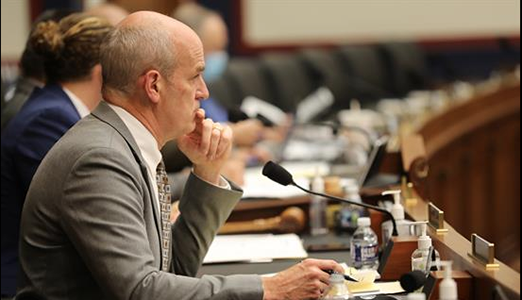
We’re grateful to the U.S. Department of Transportation’s Federal Transit Administration for awarding us with $7.2 million to help pay fuel costs for our Anacortes/San Juan Islands and Port Townsend/Coupeville routes. The funding comes from the FTA’s Ferry Service for Rural Communities Program. This is the first time we have received money from this program. We thank Sen. Patty Murray for making this possible. She wrote and helped pass new language into law that made us eligible for the program. I also thank Rep. Rick Larsen, who represents both these routes. As a ranking member of the House Committee on Transportation and Infrastructure, he was also key in helping us secure this funding. This federal grant helps us keep our ferries running while we work to build a cleaner, more reliable system.

This $7.2 million in funding will help cover fuel costs on our Anacortes/San Juan Islands and Port Townsend/Coupeville routes. We previously were awarded grants through the two other FTA Ferry Programs. Photo by Greg Bell.
|
|
Tillikum crew comes to the rescue off Orcas Island
My colleagues out in the fleet were at it again Friday, showing why they go through regular, hands-on training to help keep everyone on the Salish Sea safe. Our Tillikum crew responded to a Coast Guard request to help a person in the water near Shag Rock off Orcas Island. The person’s small rowboat was taking on water and could no longer move on its own. The crew quickly changed course, launched the rescue boat and helped the person safely to shore near where they had launched. Thankfully, the person did not need medical attention. Thank you to the Tilikum crew for putting their training into action. And thank you to all our employees out in the fleet who regularly practice these skills and stand ready to help people in trouble on the water.
 |
Able-Bodied Seafarers Sam Scull and Collin Brasfield head out in a rescue boat to assist a person in trouble off Orcas Island. Thanks to Isaac Obylschuk for capturing this moment on video and sharing it with us. |
|
|
Sailing stats for week of Aug. 10-16
For the week of Aug. 10-16, our systemwide on-time performance (sailings that left within 10 minutes of their scheduled departure) was 71.9%. By comparison, it was 73.7% during a similar week last year (Aug. 4-10, 2025). To view our on-time performance by month going back to 2017, visit our on-time performance reports page.
|
|
Customer kudos
“I wanted to reach out and give a shoutout to the crew of the Wenatchee—we held a memorial today for a beloved member of my family, and they were so thoughtful in directing us through what we should do, and it was so beautiful, and something she’d have loved.
“One of my favorite memories with her was riding the ferry when I was very young—on one occasion, we took the ferry to Vashon, and it was a windy day and we were both laughing so hard because the wind made our hair look silly. “Thank you guys for all you do ”
-Seattle/Bainbridge route customer

**If you are reading theOrcasonian for free, thank your fellow islanders. If you would like to support theOrcasonian CLICK HERE to set your modestly-priced, voluntary subscription. Otherwise, no worries; we’re happy to share with you.**




The Interisland Ferry is cancelled today.
It is not only “not enough boats”, but also, not enough crew.
It’s not only “not enough boats” and “not enough crew.” It’s also “too many riders.”
Over 20 million per year, per official WSF statistics published on January 14, 2026. Each passenger burns about a gallon of diesel fuel.
Where are all these people coming from? Why are they flocking to Washington, and particularly the San Juans?
One major reason is the pro-growth economic policies of both our county and state governments. Growth is a key driver of the ferry system’s dysfunction. Advocating for increased supply is not enough. We must also advocate for decreased demand.
The ferry system will always be behind the population growth curve. It will never be large enough to fully accommodate demand, because demand is directly linked to population growth. Increasing ferry service actually facilitates population growth, which facilitates increased ferry demand, creating a vicious cycle of perpetual scarcity. The easier it is to reach Vashon, Bainbridge, Whidbey, or the San Juans, the more that people will move to these places. Like adding lanes to a highway, expanded ferry service actually worsens the very same problem that it’s supposed to solve.
WSF has 19 ferries today, but they want 26 ferries by 2040. By the time 2040 arrives, they will want even more. The rationale will be the same. The complaints from riders about insufficient service will be the same. And the budgetary constraints will be the same. Because these problems all have the same root cause: an increasing number of people competing for access to a limited resource.
Here on the islands, we’re already resource constrained in so many ways. Our current resident population is around 20,000 people. Want to see that number go up? Start running more ferries, more often. Let’s face it, the only people who want this are the real estate brokers, the owners of vacation rentals, the operators of hipster
brew pubs and overpriced restaurants, etc. You can see the effects of growth all around you, in the stand of trees recently clear cut for a new construction project, a lack of parking spots at your favorite trail, or the long lines at the grocery store. Do you really want more of this?
We can’t just keep adding more, more, and more – whether that’s more ferry boats, more housing, more roads, or anything else. Limits are normal and natural, and these islands have limitations that are unique among the lower 48 states. Those limitations are ignored at our own peril. Growth-based economics is literally setting our world on fire, which should be obvious to everyone as wildfire smoke once again chokes the skies due to dozens of out-of-control wildfires raging across the northwest. There aren’t enough fire fighters. There aren’t enough helicopters and planes to fight the fires. There isn’t enough water to fight the fires. There isn’t enough funding. Just like there aren’t enough ferries.
See the pattern? Zoom out and consider the root causes of this systemic dysfunction. None of us can individually solve these problems, but you can make individual decisions that avoid making these problems worse. And you can advocate for an end to state and local policies that promote “business friendly” economic growth (particularly tourism).