||| FROM RUSSEL BARSH for KWIAHT |||
Last summer, more than three thousand people walked across the flats to Indian Island on daytime minus tides. Most of them were met by Kwiaht scientists, Orcas volunteers, and the 2025 Indian Island Youth Steward, Solomon Ross.
The Indian Island Marine Health Observatory was organized in 2009 at the suggestion of the Bureau of Land Management, to manage visitors and protect the island’s fragile ecosystem. The first generation of volunteers devised a monitoring framework to track changes in diversity and abundance of animals and plants in the intertidal zone, hypothesizing that there would be impacts from visitors, from the town storm sewer system, and from climate change.
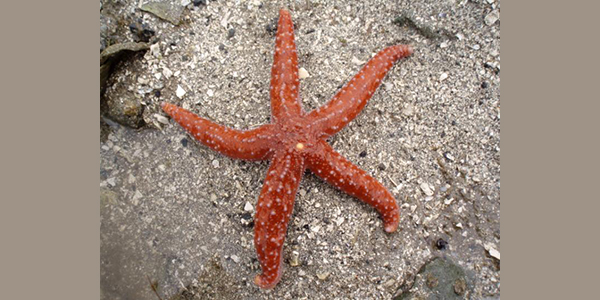
Over 40,000 visitors later, the Indian Island program has counted more than 100,000 fish, 25,000 sea stars, 68,000 eelgrass stems, as well as crabs, clams, and birds in an effort to better understand the local marine ecosystem and its response to stressors. Overall, the data indicate a decline in diversity of species, particularly in the beach areas trod by visitors. However, several species, such as Ochre Stars, Bay Pipefish, and Green Shore Crabs, are still thriving. They appear to tolerate warmer waters and longer, lower summer tides; and may also benefit from decreasing competition as other species wane.
A major concern from the outset has been the eelgrass meadow surrounding Indian Island –one of the largest intact intertidal eelgrass meadows in San Juan County, and the only one that has been monitored consistently for both density of plants, and wildlife use, for 15 years. After a long record of annual fluctuation around an unwavering average vegetation density, the meadow shrank significantly in 2024 and has not yet recovered. Sargassum, an Atlantic seaweed that was accidentally introduced to Orcas Island about 20 years ago, had been
encroaching into the Indian Island rocky reef and eelgrass meadow; but its density also plunged. Kwiaht scientists attribute both declines to windier winter storms that pushed large quantities of sand into the tide flats: a climate change effect, but not directly related to warmer waters.
Another change has been a sharp reduction in forage fish in the bay. Juvenile smelt and herring were routinely seen in the eelgrass 10-15 years ago, but no longer. At the same time, the colorful sea slugs and sunflower stars that entertained visitors 10 years ago are missing. They did not die off, but simply relocated to deeper, cooler waters in East Sound, out of sight.
The vegetated crown of Indian Island tells a different story. It was once the camas garden of a village known as Chulkwaseng, whose descendants are Saanich, Samish and Lummi. In 2009, most of the former garden was either overgrown with weeds, excavated for fireworks, or worn down to bare rock by the feet of people and geese. Volunteers demarcated a Driftwood Trail to contain human impacts, and began discouraging use during the early summer nesting season for Black Oystercatchers and other birds. The local Youth Conservation Corps
helped remove weeds. By 2020, native wildflowers had reclaimed most of the meadow. The spring wildflower display is now one of the best in San Juan County.
To learn more about the Indian Island ecosystem and how it has changed since 2009, join Kwiaht scientists and volunteers at the Episcopal Parish Hall on Sunday, March 15, at 3:00 pm to 5:30 pm, for this year’s Tides of March celebration, and annual slideshow report on the health of Indian Island and Fishing Bay!
Refreshments, Indian Island marine handbooks, and original songs by Sharon Abreu and Michael Hurwicz. Free and family friendly.

**If you are reading theOrcasonian for free, thank your fellow islanders. If you would like to support theOrcasonian CLICK HERE to set your modestly-priced, voluntary subscription. Otherwise, no worries; we’re happy to share with you.**