

||| FROM BILL APPEL |||
Over the past few years (who’s counting?) we have participated in, been treated to, or studiously ignored a fierce debate around the following question: “Should OPALCO be permitted to construct a utility-scale solar facility at Bailer Hill and/or to expand its existing solar facility on Decatur Island, notwithstanding effects on ecology, asserted traditions, and aesthetics?”
But however direct to the point of common concern, this is the wrong question which is easily answered: free market investment in solar facilities in the Northwest is not by itself economically feasible and its minor benefit does not justify its harm to ecology, native tradition, esthetics, and consequent alienation of OPALCO’s membership. The answer to this particular question leads inextricably to an irrelevant answer: free market investment in solar power does not apply when considering (1) that funding is by grant (the purpose of grants is to fund economically infeasible projects), and (2) the cumulative costs of complete loss of power far exceeds investment in both projects.
To those whose knowledge, personal concern or experience is limited to one or more of these factors, this answer is conclusive on the merits, and OPALCO’s introduction of additional factors is seen as an effort to scare its membership into acquiescence in money wasting, and ecologically and aesthetically damaging projects.
This is understandable; we live on islands. We enjoy luxurious separation from mainland concerns. Although also a full-time resident, OPALCO cannot so indulge itself. OPALCO is obligated to provide electrical energy to serve all present and future electric power demands upon which the health and welfare of the inhabitants and economy of our county depend: electrical energy from the BPA. This energy is delivered to OPALCO via three break points: two cables (aged 25 and 41 years old and increasingly operated at maximum load; a third, estimated to cost $100,000,000 will be needed: https://www.opalco.com/quick-fact-opalco-needs-a-redundant-submarine-cable-to-meet-growing-demand/2023/11/), and 10 vulnerable miles of participation in the Northwest grid that is itself becoming insufficient for the demands placed upon it, https://www.seattletimes.com/opinion/editorials/wa-lawmakers-commit-to-flexibility-to-keep-electricity-affordable-reliable/ .
Failure of any one of these break points forces major and/or well-off minor power consumers to use fossil fuel generators, isolates and imperils county inhabitants, and discourages the use of EVs contrary to county policies adopted in 2008 (Climate Stabilization Resolution 8A) and 2020 (Climate Action Resolution) and state policy (Climate Commitment Act, chapter 70A.65 RCW).
Despite two explicit warnings, February 10, 2025, (https://www.opalco.com/opalco-meets-with-county-council-energy-supply-will-not-meet-demand/2025/02/) and April 20, 2026 (https://www.sanjuanjournal.com/2026/04/29/a-warning-from-the-boardroom-opalcos-departing-board-president-sounds-energy-alarm-county-council-members-call-for-community-engagement/) County Council reaction has been limited to mild surprise, perhaps believing that classifying utility scale solar facilities as essential public facilities ended their regulatory foray into that zone.
More is needed, because OPALCO has no regulatory power to enforce, as an example, conservation. I suggest, however, that under Section 11, clause 11 of our state constitution, the county does. This provision was clearly designed to allow local governments to solve unique local problems. It is this provision upon which the state supreme court upheld our jet-ski ordinance. It is not merely pride that confirms that our circumstances are unique requiring aunique solution. It is our vulnerability.
The wrong question quoted above continues business as usual: using grant funds, OPALCO struggles to install energy facilities compliant with state goals and while under attack from righteously vociferous members, which the County Council stays above the fray. This leaves OPALCO to struggle with projects that fit within grant conditions under a storm of criticism and abuse by its members.
Much has been said about climate, for which there is the Climate and Sustainability Committee. What is missing is a mechanism to design a response to an approaching threat to the health, welfare and economy of the people of our county, one that will propose concrete action to mesh seamlessly with OPALCO’s efforts in which it alone cannot succeed. Neither party could hope to lead the other; each one, and all of us, face a common threat: interruption of mainland power, and/or overuse thereof leading to onerous rates.
I suggest that certain organizations adjust their missions to include the role of ecological triage advice. Even those in the medical profession sworn to preserve life find themselves in this role, and it is called for here to minimize the ecological (and esthetic and consequent financial) cost of missteps … but some steps must be taken. The consequences of our increasing reliance on electric energy in response to climate commitments, and events on the mainland, will not wait for us.
So, here is the right question: “Should San Juan County and OPALCO together, with advice from relevant organizations and experts as needed, protect the health, welfare and economy of the county by taking such measures and imposing and defending such carefully drafted regulations as may be necessary and appropriate to increase county resilience against interruption, insufficiency, or excessive use of electrical power?”

**If you are reading theOrcasonian for free, thank your fellow islanders. If you would like to support theOrcasonian CLICK HERE to set your modestly-priced, voluntary subscription. Otherwise, no worries; we’re happy to share with you.**



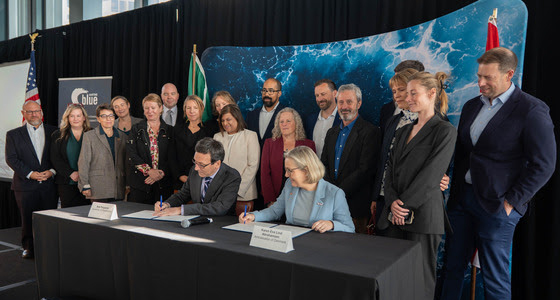

There’s a lot being said about OPALCO right now, and we want to reiterate that we welcome the conversation — even the hard parts of it.
The questions Bill brings up are real. How do we keep the lights on as regional supply tightens? How do we balance affordability, reliability, and our clean energy commitments? How do we build local resilience without overreaching? How do we work together as a community to make these hard decisions? These are not simple questions, and they don’t have simple answers.
If you have concerns about the direction of the co-op, reach out to us. Come to a board meeting. Email the team. Call the office. Vote in our elections. The Board is elected by you — they’re your neighbors, elected by you, and genuinely open to the conversation.
Come to our Annual Member Festival on May 8 – the whole team will be there! Stay tuned for other events we will add to the calendar for you to voice any concerns you have or hear your questions.
Voicing your support and helping build solutions is how we are going to move the needle on these difficult topics that the islands and the region are facing.
Sadly, these are just cheap words. OPALCO’s recent actions speak far louder than a paid spokesperson’s platitudes. It’s pretty bold that OPALCO would issue a survey as a way to ‘listen’ to members, then do exactly what the vast majority of members say they don’t want done – clearcut and build a solar farm in the trees. We are living our own Idiocracy here.
Why would I voice support for that?
Hi Bill, Hi Krista,
Do you have rooftop/residential solar (with batteries) for your home here in the San Juans?
Cheers,
Dan
Hi Dan,
In answer to your question, we lived 20 years on Waldron, and battery-solar (mounted in trees) was our sole power source. We had a generator, tested it, and never used it. Wood heat, wood stove, plenty of lights (we would occasionally see Orcas go dark), and a stereo system that could outdo a symphony hall system. We lived like royalty- but I got old and splitting wood was a chore.
Before that we lived in Seattle and had grid-tied solar. One bill from Seattle City Light was for two dollars. Even in winter, the solar panels pumped out power. There is more insolation on cloudy days than people think. The rate of return beat a savings account, and the house increased in value.
In specific answer to your question, we don’t currently have solar as we live in a condo and have no control over the exterior. If we did, we would. If things look as though they will get hairy in the very short term, we would consider a battery-and-transfer switched inverter system.
It is interesting that people are willing to live on islands for their happiness, an expensive decision also involving inconvenience, and in a sudden change of mood, not extend that philosophy to clean power, which can also be expensive and briefly inconvenient. Above subsistence, happiness need not be a financial transaction- though some of my clients over the past 60 years thought so. I don’t.
I broadly agree with Bill and the performance evidence over the past couple of years strongly underlines OPALCO’s tendency to take decisive actions that are not subject to due diligence. Repeated self-inflicted wounds are unacceptable in a “member run” Co-op. It is high time for the County Council to involve itself to the extent possible to ensure the quality of life and sustainable community values Bill mentions in navigating increasingly complex land use and electrical supply decisions.
As to seeking wider participation or review by organizations willing and able to provide “ecological triage advice” is likely just a messier process of more paralysis by analysis. So many here confuse bucolic land and sea scape beauty with ecological health and diversity. Relatively small sites on land or in the saltchuck, both of which are highly impacted and far out of whack, will generally have little to no cumulative impact to existing background conditions if reasonably analyzed and monitored. So many originally exurban, moneyed folks who as Bill mentions settle in to a somewhat delusional lifeway here grossly misunderstand the trouble we are in and that little can be done to restore previous, more beneficial conditions. That ship sailed away long ago due to regional overpopulation, consumption and cascading climate change impacts. But TRIAGE is exactly the right word. To be explicit, the competing notions that a few acres of ho-hum over stocked second growth doug fir is ecologically or scenically important or that placing already modestly producing solar panel arrays in such a forested block where solar gain is diminished are equally absurd. Thanks for new twists in possible solutions to our collective fumbling.
Bill and others,
San Juan County (≈18,600 residents, size of Anacortes or Ballard) is not so uniquely vulnerable that it requires becoming a self-contained generation island, an approach no one would seriously prescribe for similarly sized communities. Energy is fundamentally regional. Long, vulnerable delivery systems are not unheard-of (see BPA’s 110-mile Olympic Peninsula radial system serving multiple towns and the Navy), and infrastructure costs for regional transmission upgrades routinely run in the same hundreds-of-millions range as OPALCO’s $100M+ cable need. Washington’s new Electric Transmission Authority (SB 6355) rightly emphasizes producing power where it makes sense and moving it efficiently, not clearing island forests for boutique self-sufficiency. Resilience is important, but it shouldn’t excuse poor planning or grant-chasing. A serious approach starts with cable replacement, BPA relations, conservation, demand management, critical backups, and local generation only where it’s truly rational—not island exceptionalism that treats destroying sensitive landscapes as the adult choice. It’s a failure of perspective.
Size is not the determinant of the appropriate form of electric energy generation. Location is. Island make a difference notwithstanding birds-eye proximity to a regional grid. Moreover, the per-person allocation of $100M cost would be impressive, even if spread over time at a highly subsidized interest rate.
More to the point, it is the grid that we rely upon that is rapidly becoming the weak point. Much that is going on concerning improvement of the Northwest grid is planning. All actual work on the grid takes time, and it is becoming evident that sooner rather than later there will be power interruptions whose length cannot be foreseen. Such events are most likely in winter when health and safety are most at risk.
OPALCO is a nonprofit organization. Nonprofits exist by grant chasing and voluntary contributions. Another source is highly subsidized loans (thus OPALCO’s debt). This limits its projects to those for which it can obtain grants or long-term low interest loans. It is not free, as we are, to daydream as we are apt to do on its behalf as owner-members.
And, strangely, none of us blinks to exercise violent esthetic or convenience-based triage on our own land for views (but not of solar panels) or convenience involving deforestation, paving (driveways, tennis courts) and those things that make our own properties dear to our hearts. But if someone else dares to treat their property in a way that offends our (vicarious) sensibilities, it’s war.
I have enormous respect for our island-based environmental organizations. and belong to one. They in themselves are valuable resources. I regretfully agree with Steve that asking them to exercise triage themselves is a bridge too far. That said, putting it a different way, their advice on minimizing ecological damage would benefit us all and might reduce or eliminate the expense and delay of litigation for all concerned.
Well whatever we do… we’d better start thinking about doing it soon–
Resource Adequacy and the Energy Transition in the Pacific Northwest
Final Report April 2026
Key Findings
1. Accelerated load growth and continued retirements create a resource gap that grows to 9 GW of effective capacity by 2030 and 14-18 GW by 2035
2. In the near-term, the region is not on track to fill this gap due to market and institutional barriers
3. In the long-run, it is possible to achieve deep carbon reductions while maintaining reliability and affordability by investing in a portfolio of energy efficiency, wind, solar, geothermal, and natural gas
4. New natural gas peaking capacity for backup use during low hydro or low renewable conditions is a robust long-term strategy across a wide range of future scenarios
5. There will be a growing need for new local delivery capability into Washington and Oregon, particularly in the I-5 corridor, either from new resources or transmission
E3-NW-RA-Final-Report_040826.pdf
Why Decatur? Why is OPALCO eager to focus on Decatur? Years ago, a lowly bank robber named Willie Sutton made himself famous when asked: why rob banks, he replied, “That’s where the money is”. For islanders, it’s where our grid starts. The undersea cables that bring our power from the mainland come ashore on Decatur. That matters.
Today, mainland outages are our most common source of lost power, often during severe weather. Our power does not automatically come back on when a mainland problem has been fixed. Why? When restored power comes ashore, it becomes our problem. We need to carefully “clear” our grid first, beginning at our grid’s source … on Decatur.
Not so many years ago, OPALCO scored a large grant for an array of utility-scale batteries plus a community-solar-sized array of solar panels to go with it. The grant also included expert technical advice on utility-scale batteries. All located on Decatur. OPALCO members were invited to invest in the project, receiving a financial return from the energy produced. The offer was fully-subscribed.
Solar is great … if nature provides it when you need it. Locally, our peak need is in the dark of winter, when daylight is in short supply. Brrrr, turn-up the heat. Unfortunately, in our zip codes, only a small fraction of the total kilowatt-hours produced from solar are available in the coldest winter months. Yet, our summers are famously pleasant, cooled by nearby waters. By contrast, much of the urban west coast needs air conditioning in summer.
How big an array would you need to keep the batteries charged to help restart our grid? Depends on how long the outage will last. No matter my estimate on that, nature and circumstance will prove me wrong, in time. That’s why such is called “an engineering trade-off”: probability histories, investment economics, and technical issues are all involved.
Roof-top to the rescue? Nope. I’d need an already-powered grid to sell to the grid. My proffered contribution must be closely synchronized with the grid for it to make a useful contribution. Otherwise, it could fight the grid. Not so, though, if I lived on Waldron, my private system would be my “grid”.
Legal and regulatory issues, though, are fair game, a proper role for public discourse and government involvement. Wildfire is a also concern for all of us, but not an issue for utilities alone.
The battery half of a solar-battery installation can independently earn its keep. Batteries can be charged from the grid in winter during the wee hours of low demand, and release that power during peak demand hours in daytime. This is particularly important as currently it is the winter daytime peak demand that threatens all of us with Tier 2 (unprotected market) rates. At those times, the regional power demand is highest, and free market prices can go rapidly stratospheric.
The place for batteries is in garages and on the side of homes, apartments, and business, not in industrial-scale, clear-cut swaths. As I have stated before, the cost is drastically dropping on home/small business hybrid ESS systems. I just installed one myself. I’d like to see OPALCO’s money spent on incentivizing this approach, while freeing up money in hardening our grid-interconnect to the mainland. Frankly, I think most people would prefer this, but we have no way of knowing this as the recent survey resembled a PR campaign cloaked as a member sentiment analysis.
I’d be the last to discourage batteries as Foo describes. Individual members are free to do as they wish and can afford. I think the problem is that too few people will do this, and while a theoretically attractive concept, OPALCO is not in a position to install or subsidize such equipment on property it doesn’t own.
I think everyone senses that challenges are building against our ability to meet our needs whether of necessity or self-indulgence; I’m not judging here.
This has been a productive string largely grounded in reality. Whether batteries in garages or other ideas, there is a huge cumulative IQ and experience level out there from which we can help OPALCO respond to coming challenges; its challenges are also ours. One thing is clear: inaction is not an option.