||| FROM EMMA HALVERSON for WILD FISH CONSERVANCY |||
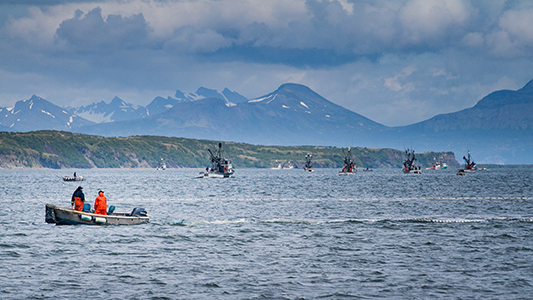
SEATTLE, Washington—Nearly nine out of ten Chinook salmon caught in commercial fisheries along the South Alaska Peninsula in 2024 and 2025 originated outside Alaska, according to research from the Alaska Department of Fish and Game (ADF&G). Yet these fisheries operate without federal Endangered Species Act (ESA) oversight of their impacts on threatened and endangered Pacific Northwest Chinook, even as communities where these fish return face strict fishing limits and invest heavily in their recovery.
Today, Wild Fish Conservancy (WFC) announced that it has notified the National Marine Fisheries Service (NOAA Fisheries) and Alaska state officials of its intent to sue over commercial and sport salmon fisheries along the Alaska Peninsula, including the marine waters of the Chignik area, and around Kodiak Island that harvest threatened and endangered Chinook salmon from the Puget Sound and Columbia River Basins. Wild Fish Conservancy has also petitioned the North Pacific Fishery Management Council and NOAA Fisheries to develop a federal fishery management plan for the salmon fisheries in federal waters of the Alaska Peninsula Management Area (Area M) and Kodiak, as the Magnuson-Stevens Act requires.
The legal action highlights a long-standing gap in federal salmon protections. While fisheries in Washington and Oregon face strict limits on their impacts to ESA-listed Chinook, these commercial salmon fisheries in Alaska are not subject to comparable federal ESA oversight—even when they catch salmon from the same protected populations.
In 2012, NOAA Fisheries removed Area M from the federal salmon management plan and deferred management entirely to the state of Alaska. Its reasoning at the time was that the share of non-Alaska salmon caught there was “believed to be very small.”
New research from Alaska’s own scientists shows the opposite. A February 2026 ADF&G genetic study found that 86.4 percent of Chinook harvested in South Alaska Peninsula commercial fisheries in 2024, and 88.4 percent in 2025, came from rivers outside Alaska. No Chinook spawning populations are documented anywhere in the South Alaska Peninsula area. In neighboring Chignik, the area’s only Chinook run has failed to meet its spawning goal in five of the last six years, prompting the Alaska Board of Fisheries to designate it a stock of management concern in 2023.
The pattern extends to Kodiak. Earlier ADF&G work found that British Columbia and US West Coast fish made up more than 80 percent of both the commercial and marine sport Chinook harvests. Kodiak’s own Chinook accounted for less than 5 percent.
“These are interception fisheries harvesting migrating salmon on their way home to rivers that in some cases are hundreds or thousands of miles away,” said Emma Helverson, Executive Director of Wild Fish Conservancy. “Communities in Washington, Oregon, Idaho, and British Columbia have closed fisheries, removed dams, and restored habitat to bring these fish home. Yet these same salmon are being caught in Alaska without the federal government even accounting for how many are protected under the Endangered Species Act. We’re taking this action because conservation responsibility cannot stop at political borders.”
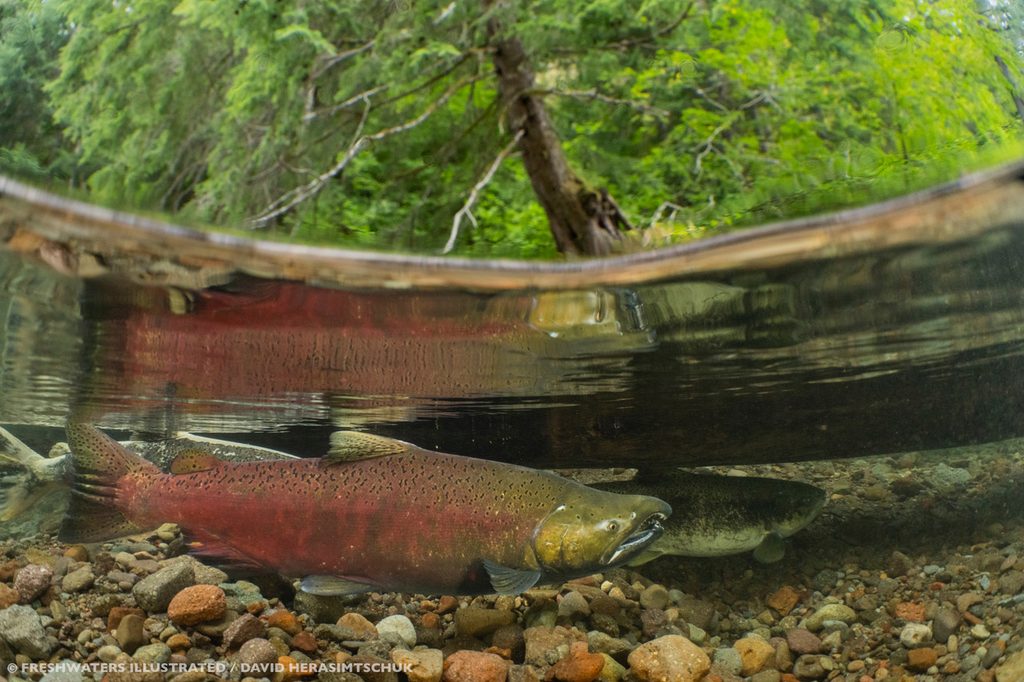
The notice letter alleges that state officials, by authorizing and managing commercial salmon fisheries in Area M and Chignik, and both commercial and sport fisheries in Kodiak, are causing the unlawful take of six ESA-listed Chinook populations in violation of Section 9 of the ESA. It further alleges that NOAA Fisheries and the US Department of Commerce, which hold exclusive authority over fisheries in federal waters, are enabling that take by deferring management to the state, have never consulted on the impacts to listed salmon as Section 7 requires, and have failed to update their 2012 environmental review under the National Environmental Policy Act.
The legal challenge also raises questions about NOAA Fisheries’ decision to leave these fisheries outside federal management. In 2016, the US Court of Appeals for the Ninth Circuit ruled that removing Cook Inlet’s commercial net fisheries from the same federal plan violated the Magnuson-Stevens Act; yet Area M remains excluded.
“You can’t conserve what you don’t account for,” said Conrad Gowell, Legal Director of Wild Fish Conservancy. “Fishing communities in Washington and Oregon are required to strictly limit their catch of threatened and endangered Chinook, while fisheries managers in Alaska directing harvest on those same fish are not participating in the coastwide effort to conserve them. The Magnuson-Stevens Act is clear that conservation and management measures cannot discriminate between residents of different states, and that fishing privileges be allocated fairly and equitably. Bringing these fisheries under a federal plan is how that standard is met, and how the burden of conservation is shared fairly beyond the communities and watersheds where these fish return home.”
The consequences also reach across the Canadian border. In Kodiak, ADF&G found that more than half of the Chinook harvested in commercial fisheries would have returned to rivers in British Columbia, where First Nations and coastal communities depend on the same runs. Imperiled salmon originating in Canadian watersheds are not protected under the US Endangered Species Act, and affected Canadian communities have no direct representation before the Alaska Board of Fisheries, which sets the rules governing these fisheries.
Mixed-stock interception fisheries are also a long-standing concern for Alaska’s own salmon populations and fishing communities, particularly along the Yukon and Kuskokwim rivers. Although Alaska salmon populations are not the subject of this legal action, Area M fisheries have faced significant scrutiny over their interception of Western Alaska-bound chum salmon, as declining returns have severely restricted subsistence and commercial fishing opportunities. As recently as February 2026, the Alaska Board of Fisheries considered proposals addressing these concerns, underscoring how the impacts of mixed-stock interception fisheries are shared by communities in Alaska and throughout the Pacific Coast.
This action builds on WFC’s long-standing work to protect wild salmon populations from overharvest throughout their migratory range, including populations that return to rivers in Alaska. That work includes the organization’s legal challenge to the Southeast Alaska troll fishery and its 2024 petition to protect Gulf of Alaska Chinook under the ESA. Wild Fish Conservancy recognizes that Alaska fishers are operating under rules established by fisheries managers and are not to blame for the management failures this legal action seeks to address. Healthy, abundant wild salmon populations are essential to the long-term future of fishing communities in Alaska and throughout the Pacific Northwest, and their recovery requires shared conservation responsibility across their entire migratory range. Wild Fish Conservancy is available during the 60-day notice period to discuss remedies with the agencies.
“Taxpayers have spent more than $9 billion over the past four decades trying to restore salmon and steelhead in the Columbia Basin, where populations like Upper Willamette spring Chinook are still threatened with extinction,” said Helverson. “That investment can’t pay off if the fish it was meant to recover are harvested off the Alaska Peninsula before they ever make it home. As the United States and Canada renegotiate the Pacific Salmon Treaty, we have an opportunity to address a fundamental inequity in how salmon are managed by ensuring every fishery harvesting these fish shares responsibility for their recovery.”
For more information and to view the notice letter, please visit www.wildfishconservancy.org.
Wild Fish Conservancy is represented by Kampmeier & Knutsen PLLC of Portland, Oregon and Seattle, Washington. kampmeierknutsen.com
Wild Fish Conservancy is a nonprofit conservation organization headquartered in Washington State and working from California to Alaska to preserve, protect and restore the northwest’s wild fish and the ecosystems they depend on, through science, education, and advocacy. wildfishconservancy.org
Crag Law Center is a nonprofit that provides free and low-cost legal services to people who are working on the ground to protect our environment, climate and communities through a unique model of legal aid for the environment. crag.org
Additional Resources
- Notice of Intent to Sue and Petition
- Preliminary Genetic Stock Composition of Chinook Salmon Harvested in Commercial Salmon Fisheries of the South Alaska Peninsula and Chignik, 2024–2025 (ADF&G)
- Genetic Stock Composition of the Commercial and Sport Harvest of Chinook Salmon in Westward Region, 2014–2016 (ADF&G)
- NOAA Fisheries Fails to Provide Federal Protections for Gulf of Alaska Chinook
- Return(s) on investment: Restoration spending in the Columbia River Basin and increased abundance of salmon and steelhead (Jaeger and Scheuerell, PLOS ONE, 2023)

**If you are reading theOrcasonian for free, thank your fellow islanders. If you would like to support theOrcasonian CLICK HERE to set your modestly-priced, voluntary subscription. Otherwise, no worries; we’re happy to share with you.**






Leave A Comment