The prophecy said famous. It never said why
||| FROM AYN GAILEY for ORCAS ISLAND FILM FESTIVAL |||
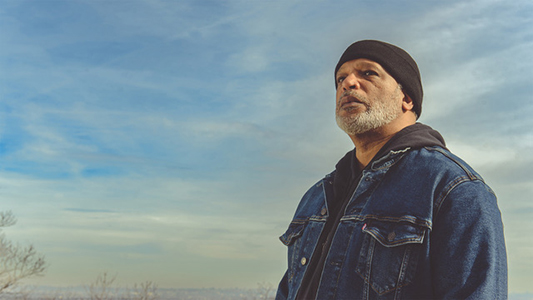
For four decades, director Ken Kwapis has moved between some of Hollywood’s best-known films and television series, directing He’s Just Not That Into You, The Sisterhood of the Traveling Pants and A Walk in the Woods, and seminal episodes of The Office, Freaks and Geeks, Parks and Recreation, and more. But it was an obscure record by three sisters from rural New Hampshire that finally inspired Kwapis, who lives part-time on Raccoon Point on Orcas Island, to make his first documentary.
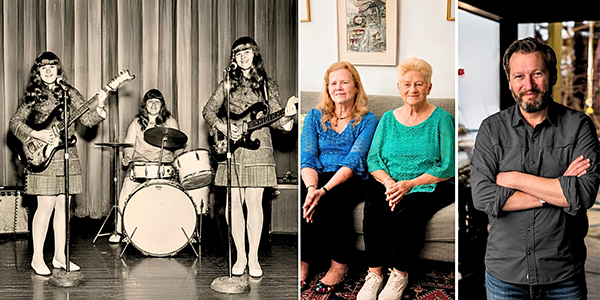
We Are the Shaggs, which premiered at SXSW this spring, tells the remarkable story of sisters Dorothy, Betty and Helen Wiggin. They had no interest in forming a band, but their father, Austin, became convinced his girls would become rock stars because his mother—a kind of farmland oracle—prophesied that they would become world-famous musicians. He pulled his daughters out of school, bought them cheap guitars and a drum kit, and basically commanded them to make music. In 1969, he brought them to a storefront recording studio outside Boston where they recorded Philosophy of the World. The album was widely ridiculed but eventually gained a passionate cult following, with admirers including Patti Smith, Frank Zappa, and Kurt Cobain.
We caught up with our Orcas neighbor about the record that has fascinated him for more than four decades.
You’ve directed film and television for decades. Why were The Shaggs the story that finally made you want to direct a documentary?
I first heard Philosophy of the World in 1980, and I was truly stupefied. I’ve been haunted by this music ever since. The three sisters seemed to play in different keys and time signatures. It was the most head-scratching music I’d ever heard in my life and some of the most polarizing music ever committed to vinyl.
But it stayed with me, and what began as a straightforward telling of their story evolved into something much more personal and philosophical.
When you reached out to the surviving sisters Dorothy and Betty, what did you discover about the women behind a story so often told by other people?
Most accounts of The Shaggs paint the Wiggin sisters as backwoods oddities, puppets under the control of a maniacal patriarch hellbent on fulfilling a crackpot prophecy. It was no surprise that Dorothy and Betty were incredibly guarded and distrustful of anyone’s interest in their lives or music. Gaining their trust was no small feat, but my goal was to humanize the sisters and dignify them. The title We Are The Shaggs is my way of giving back to Dorothy and Betty ownership of their experience.
Rather than simply dismissing The Shaggs as bad musicians, you sought out a range of music industry experts. What were you hoping to understand about their music, and what surprised you?
I wanted to understand what made The Shaggs’ music so polarizing—and whether there was something more to it than people initially heard. When it comes to music, why do we like what we like? What qualifies as “good” versus “bad”? “Sophisticated” versus “primitive”? When it comes to creativity, what is the difference between “intentional” and “accidental”? Is there such a thing as accidental art?
When I put these questions to composers, musicologists, record producers and culture writers, their perspectives consistently surprised me and made me admire the Wiggin sisters’ achievement even more.
After making the film, where do you land on the question that has followed The Shaggs for decades: Is this actually good music?
I want to make the case for taking their music seriously. Most popular acts produce music that’s easy to consume. The Shaggs, whether by design or not, made music that disturbs, puzzles, and provokes, raising profound questions about how we define “good” and “bad” art.
To me, that’s the highest compliment you can pay to any creative work.
For someone on Orcas who has never heard The Shaggs, what do you hope they will take away from the film?
Come for one of the strangest stories in rock-and-roll history, but don’t expect the film to tell you what to think about The Shaggs.
What began for me as fascination with a bizarre record became a story about creativity, family, control, and the way our ideas about art can change over time. I hope people leave the film still debating whether The Shaggs made “good” music—but perhaps questioning whether that was ever the most interesting question to begin with.
Catch We Are the Shaggs at the Orcas Island Film Festival on Sunday, October 18, at 3 p.m. at Orcas Center, with director Ken Kwapis in attendance. For tickets and information, visit www.oifilmfest.org. Watch the trailer now.
Ayn Gailey is the author of Hungry Love and Pornology and a producer of A Nice Girl Like You, the film adaptation of her work.

**If you are reading theOrcasonian for free, thank your fellow islanders. If you would like to support theOrcasonian CLICK HERE to set your modestly-priced, voluntary subscription. Otherwise, no worries; we’re happy to share with you.**

Leave A Comment