As the Pacific Salmon Commission discusses the treaty’s future behind closed doors, salmon advocates rally in Sequim and call on both countries to Let Our Salmon Come Home
||| FROM ADRIAN TUOHY for LET OUR SALMON COME HOME |||
SEQUIM, Washington—Salmon advocates from across the coast rallied in Sequim, where the Pacific Salmon Commission is meeting as the United States and Canada negotiate the future of the Pacific Salmon Treaty—an international agreement governing marine fisheries that intercept migrating salmon bound for rivers throughout Oregon, Washington, Idaho, British Columbia, and Alaska. The decisions made through these negotiations will have far-reaching consequences for salmon recovery, fisheries, and communities across thousands of miles of coastline and hundreds of watersheds.
Since 1985, the Pacific Salmon Treaty has directed the US and Canada to minimize interceptions, prevent overfishing, and “provide benefits equivalent to the production originating in its waters”. The original treaty signed four decades ago helped to significantly reduce northern ocean interceptions for various stocks, including Columbia River Chinook. However, despite initial benefits, the treaty has failed over the decades to keep pace with the needs of threatened salmon populations, endangered orcas, and local communities spanning watersheds from Oregon to Alaska. Because the treaty is renegotiated only once every 10 years, the ongoing treaty negotiation is the public’s most consequential opportunity in a decade to call on decision-makers to reform unsustainable ocean fisheries and Let Our Salmon Come Home.
To this day, the majority of all Chinook fishing occurs in ocean fisheries that intercept fish from a variety of watersheds across the coast, harming threatened salmon that commingle. Contrary to the guiding principles of the Pacific Salmon Treaty, the bulk of all harvest for Washington and Oregon’s most vital Chinook salmon runs occurs north of the US-Canada border in unsustainable ocean fisheries. Similarly, the majority of British Columbia Chinook are intercepted in Alaskan ocean fisheries. For example, Pacific Salmon Commission data show that up to 98 percent of the Chinook harvested and killed in Southeast Alaska’s commercial troll fishery—the largest Chinook fishery in the world—were bound for home rivers in Washington, Oregon, and British Columbia where various populations are listed as threatened under the Endangered Species Act. Similarly, ocean-based fleets off Vancouver Island intercept salmon of which 86 percent are bound for the Lower 48. Inevitably, too many of our Chinook are intercepted and killed in these unsustainable ocean fisheries—and too few fish return home to spawn and give rise to a new generation for recovery.
“We are asking Pacific Salmon Commission negotiators to lead us toward a more sustainable and equitable future,” said Adrian Tuohy of the Let Our Salmon Come Home campaign. “By transitioning salmon fisheries closer to the rivers and estuaries where salmon originate and return, we can finally begin addressing the root cause of the interception problem that the treaty was intended to resolve, meeting the needs of salmon, endangered orcas, and fishing communities across the coast in both the US and Canada. We don’t have another 10 years to spare. The time to act is now.”
info@letoursalmoncomehome.org www.LetOurSalmonComeHome.org
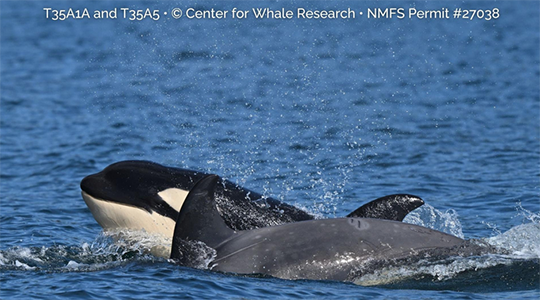
The losses affect the human communities that depend on these fish, but also the larger ecosystem. Earlier this month, Southern Resident killer whale, J31, an orca mother known as Tsuchi, was observed in the Strait of Juan de Fuca carrying her dead newborn calf. She has lost at least eight other calves, and researchers say a lack of Chinook is the biggest threat to the 76 endangered whales that remain. Scientists estimate that reforming ocean fisheries in Alaska and Canada could immediately provide them with up to 25 percent more Chinook to eat—enough to stabilize the population and provide a path to recovery.
“Southern Resident killer whales are not getting enough Chinook salmon to support their survival and recovery,” said Dr. Nick Gayeski, senior fisheries scientist with Wild Fish Conservancy. “Fisheries managed under the Pacific Salmon Treaty harvest the majority of the prey these whales depend on, and those harvest decisions affect how much prey is available to them. The Pacific Salmon Commission has a critical role to play in their recovery. If we’re going to give this population a chance, the whales’ nutritional needs must be considered when deciding how many salmon can be harvested.”
As the Pacific Salmon Commission convenes in Sequim to negotiate the decade of ocean salmon management and the fate of Chinook and orca recovery across the coast, Let Our Salmon Come Home is calling on both governments to:
- Substantially curtail unsustainable ocean fishery interceptions.
- Transition management of salmon fisheries closer to the rivers and estuaries where salmon originate and
return to encourage development of selective, sustainable, and equitable fisheries. - Support the fishing families and communities affected by the collapse of Chinook populations
coastwide, including through investments that support a just transition to sustainable fishing
opportunities and resilient local economies. - Let Our Salmon Come Home to the local watersheds, communities, and ecosystems that depend on
them.
The problem is how ocean fisheries are managed, not the fishers themselves. Importantly, reform doesn’t
have to come at the expense of the people who fish. Both countries have helped fishing families through
changes like this before, from Washington’s salmon license buyout in the 1990s to Canada’s buyback of 576
commercial salmon licenses since 2022.
“Our managers authorized fishers to take those Chinook in Southeast Alaska, and they said it was totally okay,” said Riley Starks, a commercial reef net fisher from the Salish Sea. “Management made that decision because they didn’t know any better. But now we have concrete data showing that those Chinook belong down here in the Pacific Northwest. People that have made their lives fishing for Chinook in the Southeast Alaska troll fishery should not be penalized as our managers reform and transition these fisheries—they should be compensated for that. We need our fish returning home, and trollers need to be properly supported.”
The Let Our Salmon Come Home campaign organized a day of action around the Pacific Salmon Commission’s 2026 Fall Meeting, providing opportunities for the public to raise their voice and stand up for our salmon. The day’s events include a morning rally, press conference, and procession of voices for change building toward the public comment period at the Pacific Salmon Commission meeting. Washington and Oregon residents can also sign letters asking their state and congressional leaders to back reform at letoursalmoncomehome.org.
About Let Our Salmon Come Home
Let Our Salmon Come Home is an international grassroots movement and advocacy campaign led by individuals, organizations, and businesses from California to Alaska united by a shared commitment to reform unsustainable ocean fisheries and bring our salmon home. Learn more at www.letoursalmoncomehome.org.

**If you are reading theOrcasonian for free, thank your fellow islanders. If you would like to support theOrcasonian CLICK HERE to set your modestly-priced, voluntary subscription. Otherwise, no worries; we’re happy to share with you.**






Leave A Comment