
||| FROM THE WASHINGTON POST |||
At the Department of Veterans Affairs, some employees had to sign nondisclosure agreements before reviewing plans for firings and organizational shake-ups. At the Administration for Children and Families, career staff were told not to respond in writing to panicky grant recipients whose funding had been shut off to avoid a “paper trail,” one employee said.
And at the Environmental Protection Agency, several months after Elon Musk began requiring federal workers to submit weekly emails detailing five things they’d accomplished, some managers began calling staff to say they no longer had to comply — but refused to put it in writing, according to an employee who received one of the calls.
“What’s particularly weird for me is that, as a regulatory agency, we tend to operate with the idea that ‘if it’s not in writing, it didn’t happen,’” said the employee, who has since left the government. “But we are very much moving away from things being in writing.”
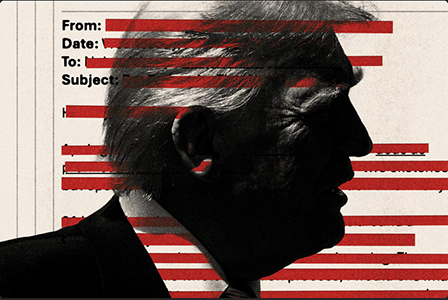
Across President Donald Trump’s administration, a creeping culture of secrecy is overtaking personnel and budget decisions, casual social interactions, and everything in between, according to interviews with more than 40 employees across two dozen agencies, most of whom spoke on the condition of anonymity to avoid reprisals. No one wants to put anything in writing anymore, federal workers said: Meetings are conducted in-person behind closed doors, even on anodyne topics. Workers prefer to talk outdoors, as long as the weather cooperates. And communication among colleagues — whether work-related or personal — has increasingly shifted to the encrypted messaging app Signal, with messages set to auto-delete.
It’s not just career staffers who are clamming up, fearful they will be tagged as rebellious or resistant to Trump’s policies and dismissed amid the administration’s push to trim the workforce, fulfilling the president’s promise to eradicate waste, fraud and abuse. Trump’s own political appointees are also resistant to writing things down, worried that their agency’s deliberations will appear in news coverage and inspire a hunt for leakers, federal workers said.
Every administration comes in urging at least some confidentiality, usually to protect presidential priorities or encourage the candid airing of views in decision-making, federal workers noted. Government employees’ devices have long been monitored, and the law prevents workers from publicly espousing political opinions or taking part in political activity while on duty.
But this shift is different, workers said — more far-reaching, affecting every aspect of external and internal communications. The overall effect has been to impede honest discussion, slow work, stir confusion and depress morale.
“I’ve never seen this much secrecy and lack of transparency from any leadership, including in the military,” said a nearly 10-year veteran of the General Services Administration. “We don’t know anything until it happens.”

**If you are reading theOrcasonian for free, thank your fellow islanders. If you would like to support theOrcasonian CLICK HERE to set your modestly-priced, voluntary subscription. Otherwise, no worries; we’re happy to share with you.**