
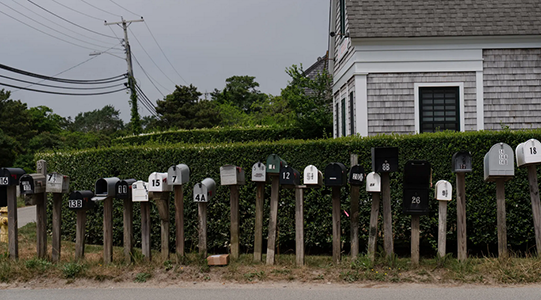
Teachers, police officers, firefighters and other workers live in overcrowded and substandard housing, or even in their cars on the beach
||| FROM THE NY TIMES |||
As private jets and superyachts arrive on Nantucket for the summer season, full-time residents and government officials are warning that the Massachusetts island must shake up the housing market so that the local work force can afford to live there.
Around 65 percent of the island’s nearly 12,000 housing units are occupied by seasonal residents. The median home price is around $2.5 million, according to data from the local housing agency and an island real estate brokerage.
That leaves little housing for workers on an island where a decades-long divide of the haves and have-nots has reached a tipping point, town leaders say.
The island town of charming cobblestone streets, lined with shops selling handmade $400 caftans and high-end restaurants offering $50 lobster rolls, is experiencing the same imbalance that has racked other vacation destinations. In Spain, seasonal workers live in tent cities on Ibiza. Day laborers in the Hamptons have formed encampments. In Frisco, Colo., ski instructors, E.R. nurses and others can live in their cars and vans in a parking lot, if they can show proof that they are working in the area.
“Nantucket has 10 years or less before the entire island is owned by island conservation entities or seasonal homeowners,” said Brian Sullivan, 50, who is a principal broker at Fisher Real Estate and has lived on Nantucket for 28 years. Even families living on the island, earning well into six-figures, are struggling to find affordable options.
Among Nantucket’s full-time work force are teachers, police officers, municipal workers, health care workers, firefighters and landscapers, many of whom commute by ferry, live in overcrowded or substandard conditions or are homeless.
Efforts to create housing that is attainable for households with lower incomes have included a program called Lease to Locals, which gives a stipend to property owners willing to turn their short-term rentals into year-round residences. But the initiatives have been slow-starting or are not large enough to meet the demand. And then, there’s opposition.
“The most frustrating phrase that I hear a lot is, ‘I’m not opposed to affordable housing, but,’” said Brooke Mohr, a member of Nantucket’s Select Board. “Generally, the but is not here near me. Not there. Not more in this location.”
On Nantucket, the problem is not evident, hidden behind ocean views and cottages. “Having your friends know that you are struggling can add a layer of stress on top of an already-challenging personal situation,” said Ms. Mohr, 64.
One solution could be the curbing of short-term rentals, which have been the subject of lengthy legal battles and town votes. But homeowners have pushed back, saying short-term rentals of stays 31 days or less are a way to afford the mortgage and benefit the island’s economy.
At a town meeting in May, Penny Dey, a real estate broker who has lived year-round on the island for 49 years, said, “It is a fundamental property ownership right to rent your home responsibly, and it’s reckless not to safeguard that right for future generations.”
Ms. Dey, who serves as the chair of the Nantucket Housing Authority and as vice-chair of the Town’s Affordable Housing Trust Fund, said the local economy depends on tourism and vacationers depend on the seasonal housing because the island lacks large-scale hotels.
“Short-term rentals have been blamed for everything on Nantucket except erosion,” Ms. Dey, 66, said.

**If you are reading theOrcasonian for free, thank your fellow islanders. If you would like to support theOrcasonian CLICK HERE to set your modestly-priced, voluntary subscription. Otherwise, no worries; we’re happy to share with you.**







Working class people could just stop showing up. I suppose the rates that homeowners can pay in a place with a median home price of $2.5 million are too good to pass up, and if Person A decided to strike, Person B would happily take their place. But it would be relatively easy to shut down the whole island for a week. Let the 1% cook their own meals, mow their own laws, fix their own plumbing, and wash their own dishes.
The power of organized labor should not be underestimated. But when people are already living in vans or in tents, how much further can they fall? It’s quite sad to consider that in this backwards nation, working class people are so impoverished that they don’t even have the means to get organized and go on strike.