||| FROM RUSSEL BARSH for KWIAHT |||
The San Juan Islands experienced an outbreak of highly-pathogenic avian flu (H5N1) from mid-November to mid-January. It probably began in lower San Juan Channel, between Cape San Juan and Davis Head, most likely introduced by southward-migrating Cackling Geese.
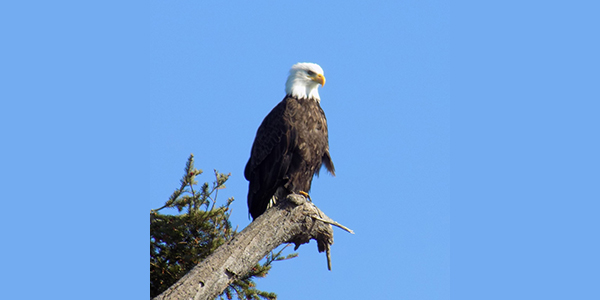
The geese shared it with gulls. It spread to Bald Eagles that scavenged dead geese or gulls, and then to other scavengers, including raccoons and foxes. In its role assisting the Washington Department of Fish and Wildlife in retrieving wildlife carcasses for testing by the state
veterinary laboratory, Kwiaht recovered 18 dead birds and mammals; 11 were confirmed avian flu-positive. Victims included at least three foxes from San Juan Island.
Although mammals were infected and died, there was no evidence of either mammal-to-mammal transmission in the islands, or any infections of people or their pets. However, the H5N1 virus has passed from cow to cow in dairy herds elsewhere, and rarely, from cattle to
humans. It was feared that dogs might catch H5N1 from infected raccoons or foxes on San Juan Island, thus placing people at greater risk.
The next outbreak could be as early as April. Marine birds have begun their annual spring migration. Seven juvenile Elephant Seals died from avian flu at Año Nuevo State Park near San Francisco in mid-February, raising concerns that infected seabirds are heading northward along the Pacific Flyway. Avian flu was responsible for the deaths of thousands of seals and sea lions in coastal Chile in March and April 2023, followed in July 2023 by an outbreak near Port Townsend that killed more than a thousand Caspian Terns and 16 Harbor Seals.
A recent review in the journal Nature observed that the marine mammal clade of H5N1 is potentially more infectious to humans than the form of the virus that has its reservoir in aquatic birds. The possibility that H5N1 will return to the San Juan Islands transported by
migrating seals or sea lions, rather than migratory birds such as geese, ducks or swans, is a cause for vigilance.
The northward spring migration of birds and marine mammals along the Pacific Coast has begun, and we urge islanders to report dead or dying wildlife as quickly as possible. Animals that we expect to be susceptible to H5N1 include geese, ducks and swans; seabirds such as gulls and cormorants; avian scavengers such as Bald Eagles and Turkey Vultures, as well as hawks and owls; raccoons, foxes, minks, otters, seals and sea lions.
First, go to https://wdfw.wa.gov/get-involved/report-observations to make your online report to state wildlife authorities; you can also phone them a 425-775-1311. Then please contact Kwiaht at info@kwiaht.org for possible sampling and disposal. Kwiaht will coordinate
with WDFW and ensure that potentially infected carcasses are removed from the island food chain. Cover the carcass in the meantime with a (disposable) sheet, tarp, or cardboard box to prevent scavengers from eating or removing them.
For your own safety and health, do not handle sick or move dead wildlife yourself. If you do come in contact with them, wash your hands thoroughly, wash the clothing you were wearing, and if you subsequently experience any respiratory or flu-like symptoms, contact the
responsible San Juan County Public Health Nurse at 360-370-7544.

**If you are reading theOrcasonian for free, thank your fellow islanders. If you would like to support theOrcasonian CLICK HERE to set your modestly-priced, voluntary subscription. Otherwise, no worries; we’re happy to share with you.**