||| FROM ISLAND STEWARDS |||
Humans have been adapting to accelerated change for a long time, often without being given real choices about how that change unfolds.
Since the industrial revolution, daily life has been reorganized again and again around efficiency, scale, and extraction. Many people benefited. Many others lost proximity to work, to land, to care, and to decision-making itself. Over time, dependence on distant systems replaced local autonomy, even as those systems became harder to reach and slower to respond.
Each wave of modernization promised relief. Each also demanded new forms of endurance.
By the time we arrived at the present moment, participation in civic life required more than care or commitment. It required time, transportation, stamina, and fluency in bureaucratic language. These resources are not evenly distributed, yet our democratic processes still behave as if they are.
In San Juan County, this misalignment runs especially deep because many people came here to escape systems that did not serve them. Some arrived looking for relief — from speed, from precarity, from lives shaped by constant extraction. Others arrived later, able to afford privacy, beauty, and refuge after years of excess elsewhere. A reward. A sanctuary. A bit of heaven on earth.
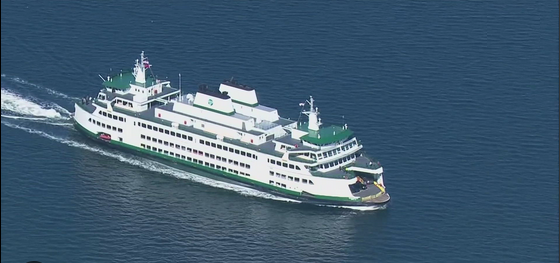
Whatever brought us here, we now depend on the same ferries, clinics, power grid, food systems, and fragile ecosystems. We benefit together, and we fail together — even if the consequences are uneven.
There is real common ground: care for local food, the land, and the complex ecosystems these islands harbor, alongside a long history of Tribal stewardship that has persisted despite displacement and assault.
But values alone do not create resilience.
Without an economic system that allows farmers to rebuild food security, the islands remain vulnerable. Without young, able-bodied people having the time, support, and stability to work, learn, and stay, they will continue to leave. Without researchers — both citizen and professional — we lose the feedback loops that allow nature to guide us rather than speculation. And without access and shared direction, participation thins while decision-making concentrates elsewhere.
Over the past year, Island Stewards facilitated focus groups, table talks, and education sessions connected to the 2025 Comprehensive Plan. We listened closely to people living and working in the county. What emerged was consistent and grounded in lived experience. Housing is a real concern, but building additional units alone has not addressed the underlying strain. In a seasonal community with a high proportion of vacant homes, rising energy demands, and limited infrastructure, additional construction can deepen inequity rather than alleviate it.
What surfaced repeatedly as more fundamental was transportation.
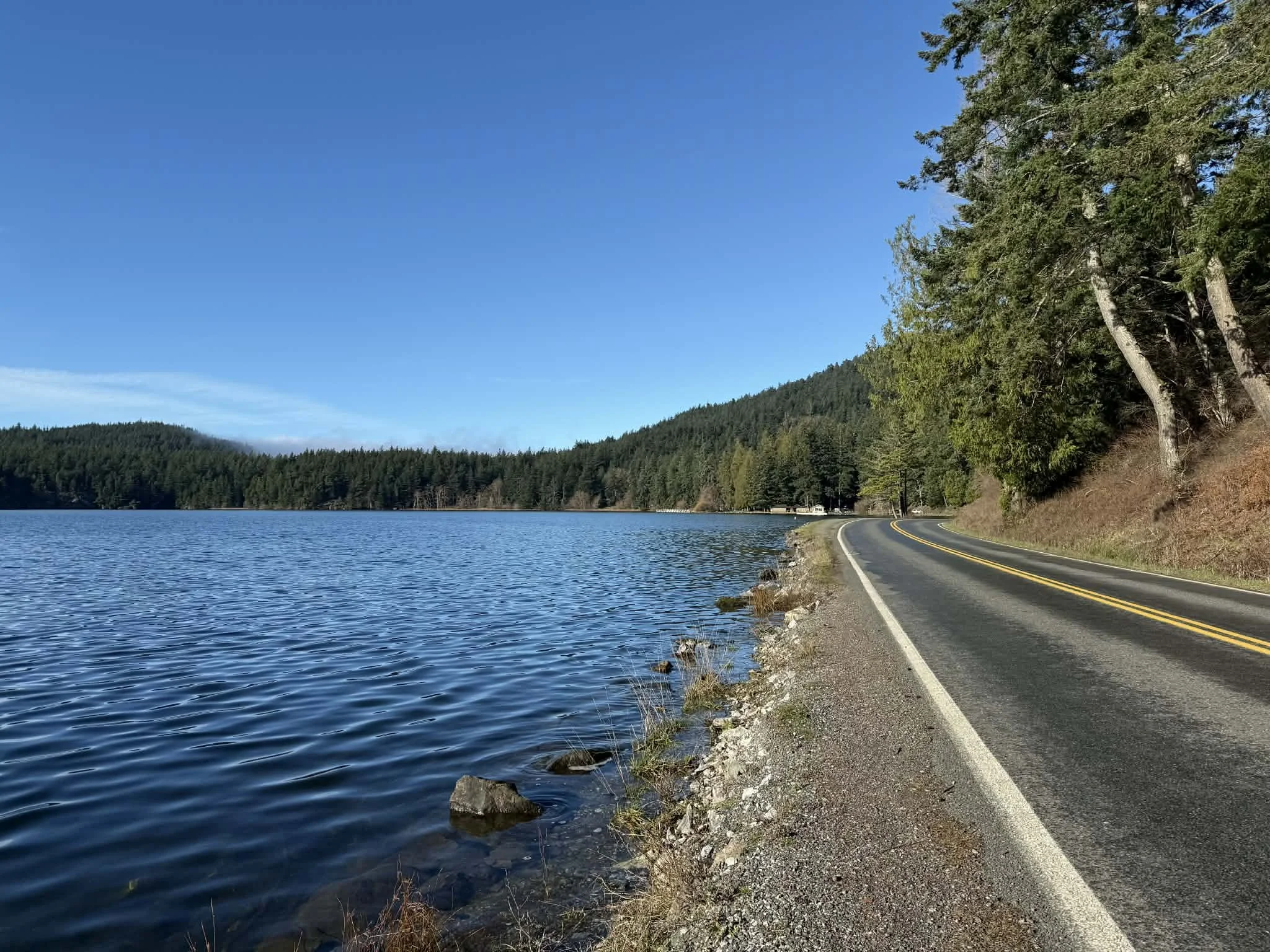
Transportation enables access to employment, medical care, and civic life. It lowers household costs, reduces isolation, supports farmers and workers, and mitigates environmental impacts. Without reliable transportation, even insured residents struggle to reach care, employers cannot fill positions, and costs continue to rise. Over time, people leave.
When the State of Washington applied for federal emergency funding through the Rural Health Transformation Department, Island Stewards contributed this community-based data and volunteered significant time. The department was created in response to a recognized gap between policy and lived conditions, with the intent of supporting efficient, data-informed solutions grounded in real experience.
The state ultimately received approximately 90 percent of the requested funding.
Those funds are now being directed primarily toward long-term planning for affordable housing rather than piloting near-term solutions that could have been designed and implemented by those most affected. As a result, a transportation-centered approach — one with the potential to address access, health outcomes, income stability, and environmental impact simultaneously — was sidelined.
This is not a question of intent. It reflects a familiar pattern in which systems default to established frameworks, even when changing conditions suggest a different focus is needed.
Participation matters in these moments not as a civic gesture, but as a source of practical knowledge. When lived experience is acknowledged but not trusted, decision-making becomes procedural rather than responsive. Over time, participation reflects who can afford to remain engaged, rather than where consensus actually exists.
San Juan County is small, but it has a big personality. Our county staff are hardworking, capable, and stretched thin. They want to serve the people who live here. But they cannot do that when community input arrives fragmented, contradictory, or diffuse. Clear positions, shared language, and visible consensus give public servants something solid to defend, fund, and implement.
Currency was originally designed to substitute for trust between strangers. In civic spaces, it has also come to shape whose voices carry weight — by determining who can afford time, sustained engagement, and visibility.
Participation is therefore uneven by design. Those with time and fluency shape outcomes, while others fall out of view in systems that move too quickly during business hours and too slowly to meet real need.
If we want a democracy that functions here, those who can afford time must be willing to use it differently — not by speaking more, but by creating space for those who cannot.
Rebuilding trust does not begin with agreement. It begins with proximity.
At a human scale, that looks like neighbors coordinating.
If you are going to town, does someone need a ride?
If you attend a meeting, can you bring information back?
If you disagree, can you listen without correcting or advising — simply because you share responsibility for this place?
Our inner circle is not ideological. It is geographic. We are bound by the destiny of place.
Often, this means focusing on systems that connect daily life rather than treating them as isolated issues. This could mean focusing on a small number of practical areas where consensus is possible and urgency is real:
-
A vacant housing tax that directly funds repair, reuse, and long-term stewardship — with money staying local and reaching the people doing the work year-round.
-
Agricultural policy that supports slow rehabilitation of soil and ecosystems, rather than quick fixes or aesthetic overhauls that import inputs while exporting resilience.
-
Rental systems that allow landlords to rent and renters to stay, with shared responsibility for rising taxes, insurance, and repairs — especially as vacation homes push up costs for everyone else.
-
Transportation policies that reduce car dependency, ease ferry bottlenecks, and lower ecosystem strain — while acknowledging the real costs of vehicle ownership here. We travel together.
This work cannot move forward on intention alone. It requires people, time, and resources.
Island Stewards is actively building the capacity needed to support real civic participation — training community members in legislative process, policy literacy, and effective engagement so they can represent their neighborhoods, workplaces, and families when decisions are made.
The goal is not to professionalize voices, but to ensure people can speak clearly, confidently, and be taken seriously within systems that often privilege those with prior access.
We are exploring private and community-based funding to support this work in real time — so participation does not depend on unpaid labor, personal sacrifice, or who can afford to stay engaged the longest. These resources allow us to train local stewards, compensate expertise, and keep knowledge circulating within communities rather than concentrating it in a few hands.
If you care about the future of this place, we invite you to join us — by participating, by helping carry information back into your community, or by contributing financially so more people can be trained, supported, and heard.
Democracy remains functional only when participation is shared and sustained. Supporting this work is a way to strengthen representation now — not later — and to ensure stewardship remains possible as systems grow more complex and decisions accelerate.
We are living through a period of overlapping ecological, economic, and civic change. In places like this, that reality is not theoretical — it is felt daily. This is the age of the Island Steward. Not as a title, but as a responsibility: the recognition that those of us living on the frontlines of multisystem change must ensure stewardship does not disappear as systems strain and remake themselves.
Stewardship is how rural character survives pressure. It is how democracy remains functional at a human scale. It is how care, accountability, and continuity are carried forward when certainty is no longer available.
If you care about this place — its people, its limits, and its future — we invite you to step into that work with us.
Happy New Year from Robin and the Island Stewards Team!
PS: Exulansis is a word used to describe the feeling of realizing that something meaningful in your life can no longer be fully explained to someone who hasn’t lived it.
It’s the quiet decision to stop trying — not because the experience no longer matters, but because the listener doesn’t have the context to receive it.
Exulansis captures a pattern many people experience in civic life.
People speak from lived experience — of work, land, care, loss, access, constraint. Over time, when those experiences are acknowledged but not meaningfully incorporated into decisions, people stop trying to translate them. Not out of apathy, but out of fatigue.
They learn that the system can hear them, but cannot hold what they are saying
This work exists to change that. By bringing voices together, clearly and in numbers systems recognize, we create the conditions for lived experience to shape outcomes — not just inform process.

**If you are reading theOrcasonian for free, thank your fellow islanders. If you would like to support theOrcasonian CLICK HERE to set your modestly-priced, voluntary subscription. Otherwise, no worries; we’re happy to share with you.**