
In new paper in the New England Journal of Medicine, leading researchers to propose action to protect kids
||| FROM THE GUARDIAN |||
Children are suffering and dying from diseases that emerging scientific research has linked to chemical exposures, findings that require urgent revamping of laws around the world, according to a new paper published on Wednesday in the New England Journal of Medicine (NEJM).
Authored by more than 20 leading public health researchers, including one from the US Environmental Protection Agency (EPA) and another from the United Nations, the paper lays out “a large body of evidence” linking multiple childhood diseases to synthetic chemicals and recommends a series of aggressive actions to try to better protect children.
The paper is a “call to arms” to forge an “actual commitment to the health of our children”, said Linda Birnbaum, a former director of the US National Institute of Environmental Health Sciences and a co-author of the paper.
In conjunction with the release of the paper, some of the study authors are helping launch an Institute for Preventive Health to support the recommendations outlined in the paper and to help fund implementation of reforms. A key player in launching the institute is Anne Robertson, vice-president of Robertson Stephens Wealth Management and a member of the family that built RJ Reynolds Tobacco.
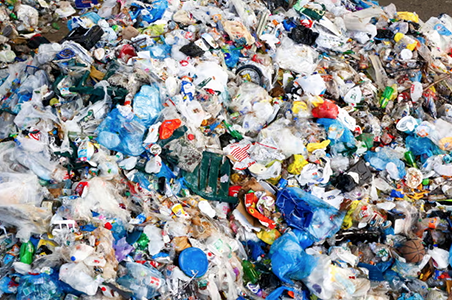
The paper points to data showing global inventories of roughly 350,000 synthetic chemicals, chemical mixtures and plastics, most of which are derived from fossil fuels. Production has expanded 50-fold since 1950, and is currently increasing by about 3% a year – projected to triple by 2050, the paper states.
Meanwhile, noncommunicable diseases, including many that research shows can be caused by synthetic chemicals, are rising in children and have become the principal cause of death and illness for children, the authors write.
Despite the connections, which the authors say “continue to be discovered with distressing frequency”, there are very few restrictions on such chemicals and no post-market surveillance for longer-term adverse health effects.
“The evidence is so overwhelming and the effects of manufactured chemicals are so disruptive for children, that inaction is no longer an option,” said Daniele Mandrioli, a co-author of the paper and director of the Cesare Maltoni Cancer Research Center at the Ramazzini Institute in Italy. “Our article highlights the necessity for a paradigm shift in chemical testing and regulations to safeguard children’s health.”
Such a shift would require changes in laws, restructuring of the chemical industry and redirection of financial investments similar to what has been undertaken with efforts to transition to clean energy, the paper states.
The paper identifies several disturbing data points for trend lines over the last 50 years. They include incidence of childhood cancers up 35%, male reproductive birth defects have doubled in frequency and neurodevelopmental disorders are affecting one child in six. Autism spectrum disorder is diagnosed in one in 36 children, pediatric asthma has tripled in prevalence and pediatric obesity prevalence has nearly quadrupled, driving a “sharp increase in Type 2 diabetes among children and adolescents”.
“Children’s health has been slipping away as a priority focus,” said Tracey Woodruff, a co-author of the paper and director of the University of California San Francisco’s (UCSF) program on reproductive health and the environment. “We’ve slowly just been neglecting this. The clinical and public health community and the government has failed them.”
The authors cite research documenting how “even brief, low-level exposures to toxic chemicals during early vulnerable periods” in a child’s development can cause disease and disability. Prenatal exposures are particularly hazardous, the paper states.
“Diseases caused by toxic chemical exposures in childhood can lead to massive economic losses, including health care expenditures and productivity losses resulting from reduced cognitive function, physical disabilities, and premature death,” the paper notes. “The chemical industry largely externalizes these costs and imposes them on governments and taxpayers.”
The paper takes issue with the US Toxic Substances Control Act (TSCA) of 1977 and amendments, arguing that even though the law was enacted to protect public health from “unreasonable risks” posed by chemicals, it does not provide the Environmental Protection Agency (EPA) with the authorities needed to actually meet that commitment.
Instead, the manner in which the law is implemented assumes that all manufactured chemicals are harmless and beneficial and burdens government regulators with identifying and assessing the chemicals.
“Hazards that have been recognized have typically been ignored or downplayed, and the responsible chemicals allowed to remain in use with no or limited restrictions,” the paper states. “In the nearly 50 years since TSCA’s passage, only a handful of chemicals have been banned or restricted in US markets.”
Chemical oversight is more rigorous in the European Union, the paper says, but still fails to provide adequate protections, relying heavily on testing data provided by the chemical industry and providing multiple exemptions, the paper argues.
The authors of the paper prescribe a new global “precautionary” approach that would only allow chemical products on the market if their manufacturers could establish through independent testing that the chemicals are not toxic at anticipated exposure levels.
“The core of our recommendation is that chemicals should be tested before they come to market, they should not be presumed innocent only to be found to be harmful years and decades later,” said Phil Landrigan, a co-author who directs the program for global public health and the common good at Boston College. “Each and every chemical should be tested before they come to market.”
Additionally, companies would be required to conduct post-marketing surveillance to look for long-term adverse effects of their products.
That could include bio-monitoring of the most prevalent chemical exposures to the general population, Mandrioli said. Disease registries would play another fundamental role, he said, but those approaches should be integrated with toxicological studies that can “anticipate and rapidly predict effects that might have very long latencies in humans, such as cancer”. Clusters of populations with increased cancer incidences, particularly when they are children, should trigger immediate preventive actions, he said.
Key to it all would be a legally binding global chemicals treaty that would fall under the auspices of the United Nations and would require a “permanent, independent science policy body to provide expert guidance”, the paper suggests.
The paper recommends chemical companies and consumer product companies be required to disclose information about the potential risks of the chemicals in use and report on inventory and usage of chemicals of “high concern”.
“Pollution by synthetic chemicals and plastics is a major planetary challenge that is worsening rapidly,” the paper states. “Continued, unchecked increases in production of fossil-carbon–based chemicals endangers the world’s children and threatens humanity’s capacity for reproduction. Inaction on chemicals is no longer an option.”
Landrigan said he knew the effort faces an uphill climb and could be particularly challenging given the incoming Trump administration, which is widely expected to favor deregulation policies.
“This is a tough subject. It’s an elephant,” he said. “But it is what needs to be done.”

**If you are reading theOrcasonian for free, thank your fellow islanders. If you would like to support theOrcasonian CLICK HERE to set your modestly-priced, voluntary subscription. Otherwise, no worries; we’re happy to share with you.**






I agree 100%:
“The authors of the paper prescribe a new global “precautionary” approach that would only allow chemical products on the market if their manufacturers could establish through independent testing that the chemicals are not toxic at anticipated exposure levels.”
“The core of our recommendation is that chemicals should be tested before they come to market, they should not be presumed innocent only to be found to be harmful years and decades later,” said Phil Landrigan, a co-author who directs the program for global public health and the common good at Boston College. “Each and every chemical should be tested before they come to market.”
I suggest buying simple products without fragrances because fragrances are often toxic. “Air fresheners” are extremely toxic.
I buy unscented dish washing liquid and use white vinegar to clean toilets. Baking soda is a good non-toxic, mildly abrasive cleaner, also.
Even products such as Rinse Aid for automatic dishwashers contain a scary compound, nonylphenol ethoxylate, that can change the sex of fish and amphibians and may be affecting people.
From Wikipedia: “…the commercially important non-ionic surfactants alkylphenol ethoxylates and nonylphenol ethoxylates are used in detergents, paints, pesticides, personal care products, and plastics. Nonylphenol has attracted attention due to its prevalence in the environment and its potential role as an endocrine disruptor and xenoestrogen, due to its ability to act with estrogen-like activity.[6] Since its discovery in 1940, nonylphenol production has increased exponentially, and between 100 and 500 million pounds of nonylphenol are produced globally every year,[12][16] meeting the definition of High Production Volume Chemicals.
This same issue was the topic of a medical pediatrics conference I attended at UW in Seattle in the year 2000. Given the bias toward corporate profits instead of protecting health and safety, it’s not surprising that we’re still “discovering” the same issue 25 years later.
Additional things to note:
1. Everything that negatively impacts development in human fetuses, infants, and children also negatively impacts development in young wild mammals, fish, birds, reptiles, amphibians, and even invertebrates.
2. The method of safety testing for chemicals–the same method used to determine safety of pharmaceuticals–assumes we can study a novel entity for a few months and predict its long term impact. It assumes we can isolate it from every other variable and know that it is safe. Neither of these assumptions is realistic for chemicals that are bio-accumulative, and thus stored and accumulated over a lifetime in fat tissue such as the entire human nervous system. Nor are these assumptions accurate in view of the fact that no one alive has escaped exposure to multiple toxic chemicals (and/or drugs) that may be present in the body years or even decades after exposure, and are likely to interact with one another in ways that may compound damage in living bodies.
3. Negative health impacts are not limited to fetuses, infants, and children. All of us are susceptible. Note, for example, this 2015 NIH article linking bioaccumulative toxicants to dementia: https://pmc.ncbi.nlm.nih.gov/articles/PMC4334623/
With all this in mind, don’t wait for laws to change. We should assume that manufactured and refined chemicals–with increased attention to those that we commonly use such as alcohol, skin, hair and nail products, fragrances, detergents, paint, epoxy and other glues and waxes, plastics that come into contact with food and drinks, household pesticides, etc, are toxic regardless of safety studies, and therefore minimize purchase, use,and consumption and take precautions to avoid breathing smoke or fumes containing them. (Don’t burn your garbage!) And we should be more careful about what we pour down the sink or toilet or allow to leak on the ground or into storm drains, streams, or the ocean. There is no “away” to which we can throw toxic things, that won’t come back around to us.
Thanks, Janet, for your suggestions about some alternatives.
Thank-you, Alexandra, for emphasizing that many of the new toxins that people have created are accumulating in our environment. This is especially true for chemicals that are happiest in fat, or lipophilic, “fat-loving”.
DuPont created a slogan, “Better Living Through Chemistry.”
But the majority of new chemical compounds are problematic for our health and for our environment.
Think about the “side effects” of most medicines.
We are living with the side effects of the Chemical Revolution.