||| FROM THE CENTER FOR WHALE RESEARCH |||
| Full Encounter Report |
|
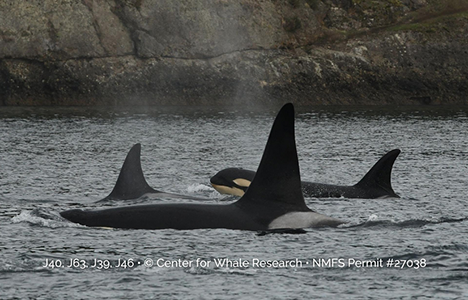
ObservBegin: 12:22 PM ObservEnd: 12:40 PM Vessel: KCB III Staff: Dave Ellifrit Other Observers: Rachel John Pods: J IDsEncountered: J16, J19, J22, J26, J27, J31, J35, J36, J37, J38, J39, J40, J41, J42, J44, J45, J46, J47, J49, J51, J53, J56, J57, J58, J59, J62, and J63 LocationDescr: Swanson Channel/ Enterprise Reef |
|
EncSummary: After receiving reports of J pod heading north at the south end of Swanson Channel, the team met and Snug Harbor and left in “KCB3” at 1150. Eager to check on the status of J42’s new calf, J64,we headed north up Haro Strait and then up Swanson Channel. We spotted dorsal fins ahead of us off the south end of Village Bay and the encounter began at 1222. J pod was in a single group heading slowly north along the shoreline of the point at the south end of Village Bay. The whales crossed the mouth of Village Bay on the east side of Enterprise Reef. We began taking our ID shots and were making sure we had a photo of all the whales present. J16, J26, and J42 were oh-so peripheral to the rest of the pod, being just a couple of dozen yards to the northwest of the others. We found J42 and held the camera trigger down while waiting for J64 to pop up behind her. Unfortunately, J64 did not surface after J42. We hoped maybe it was nursing or something, but we kept seeing J42 surface repeatedly, and there was no calf with her. After a few long dives and still no calf, we had to conclude that J64 did not survive and was now gone. We kept taking photos of the whole group, hoping J64 was playing with other whales. However, there was no sign of the newest calf even though we kept seeing J62 and J63. Photos would later prove what we knew at the time, that J64 was not present, either with J42 or any other whale in J pod. Disappointed, we ended the encounter at 1240 with J pod rounding Helen Point into Active Pass. Important Note: Based on this encounter, we are confirming that J64 is most likely deceased. We will continue to monitor in future encounters, as our standard protocol is to consider a whale deceased after observing three consecutive encounters without the whale present. However, unlike adult whales, which may travel a significant distance from other whales for extended periods, we would not expect a newborn to be on its own for any length of time. This is J42’s first confirmed calf, and mortality rates for young calves, especially those born to first-time mothers, are incredibly high in the Southern Resident population. Poor nutritional status and the transfer of toxins from mother to calf during gestation and lactation are key factors. Southern Residents need healthy, abundant Chinook Salmon populations to sustain themselves and the calves they raise if this population is to survive. |

**If you are reading theOrcasonian for free, thank your fellow islanders. If you would like to support theOrcasonian CLICK HERE to set your modestly-priced, voluntary subscription. Otherwise, no worries; we’re happy to share with you.**