

True Generosity — You’ll Know It When You Feel It
||| AS THE PARADIGM SHIFTS by ROSIE KUHN |||
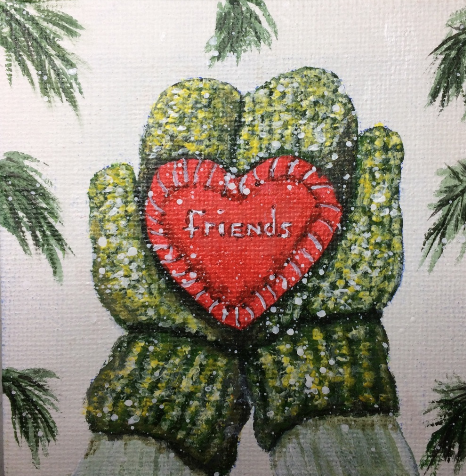 These holidays—Hanukkah, Christmas, Kwanzaa—arrive each year offering opportunities to experience our hearts expressing the joy and love that can arise through generosity of spirit.
And yet, this piece began somewhere else entirely.
It began with donation requests, expectations of gift-giving, and the familiar swirl of resentment, emptiness, not-enoughness—and the impulse to just say no.
I want to want to be generous.
And at the same time, there’s a deep—let’s call her Scrooge—part of me that says, “Hell no.” I tell myself I don’t have enough money, and then notice I’m online, looking for the perfect thing to buy myself.
That contradiction matters.
Wanting to Be Impeccable—Without Overriding Myself
My intention—personally and professionally—is to be aligned, as best I can, with my deepest knowing and highest truth. I want my actions to match my words. Which means authenticity matters to me—especially when it comes to generosity of spirit.
So I can’t ignore the restlessness and irritability that arise when the requests come at me. My reflex is familiar: Just give already. Get it over with. You know you should. But overriding myself doesn’t actually work.
When I ignore the part of me that feels irritated, she doesn’t disappear. She becomes more
irritable—less available for joy, less open to genuine generosity.
More than ever, I’m committed to healing my relationship with myself. This includes noticing all the ways I’ve ignored, distracted or denied feelings I was trained to see as unacceptable–frustrated, sad, angry—especially during the holidays.
I’m learning to stop before I override these voices.
I’m learning to pause and say, Okay. You have my attention. I’m here. I’m listening. Even as I write this, I can hear another part of me wanting to add, And let’s hurry this up. I’ve got stuff to do!
Sometimes it takes time.
Sometimes slowing down is what allows something true to come through.
The Yes, the No, and the In-Between
Is this really about money and generosity?
Yes—it looks like it is.
And also—no, it isn’t.
This is a dilemma of the heart, not the pocket. It lives in the in-between.
I want to be generous, loving, kind, and caring.
And I don’t want to be coerced.
And I resent being asked.
And I feel guilty knowing others have greater needs.
And I’m angry because I feel pressured.
And then I want something just for myself—and, again, I notice myself becoming a little…
Scroogy.
This is where Scrooge becomes interesting.
In A Christmas Carol, Ebenezer Scrooge didn’t lack money. Through his life experiences, he came to believe that money was his only safe resource. Without it, he felt vulnerable—without safety, trust, or connection. His refusal wasn’t a moral failure; it was protection.
Scrooge as Protector (Not Problem)
Seen this way, my inner Scrooge isn’t the enemy of generosity. She is the guardian of something that once felt unprotected and vulnerable.
This part of me learned long ago that giving too freely of herself could cost something essential.
Somewhere along the way—though I don’t know exactly where—my heart was broken by giving too much, too soon, to someone who didn’t value me or my heart. To her, giving came to feel dangerous: vulnerable, lonely, unappreciated.
So she learned to hold on. To say no. To brace. To protect.
What might look like stinginess from the outside is, on the inside, a vigilant form of care. When I listen closely, I can feel how alert she is, how quickly she scans for pressure or emotional obligation—especially when generosity stops feeling like choice and starts feeling like demand.
This isn’t stinginess.
It’s a memory.
And when I try to override her—pushing past her discomfort with guilt, shoulds, or spiritual
correctness—she doesn’t budge. She contracts more deeply into isolation.
That contraction isn’t selfishness.
It’s how protection works when it isn’t heard. I suspect you know what I’m talking about.
Overriding the Signals
This is where the signals begin to matter.
Resentment, irritability, resistance, even the urge to shut down the holidays altogether—these aren’t character flaws. They’re communications. They’re my body and heart letting me know something isn’t aligned.
Most of us were never taught to listen this way. We were trained to override these signals—to judge them, silence them, or spiritually bypass them. We learned that “good” people give without hesitation, irritation, or inner conflict.
So when these feelings arise, the impulse is to rush past them.
Just give. Get it over with. Be the bigger person.
And in doing so, we override ourselves.
But overriding doesn’t resolve tension—it buries it. And buried tension leaks out sideways: as resentment, withdrawal, performative generosity, or quiet self-betrayal.
When I slow down instead—when I stop before I override—I can begin to sense what’s actually being asked of me. Not by the season or the culture, but by myself.
And that’s where discernment begins.
The Hunger That Has No End
There is real hunger in the world. I don’t doubt that. It shows up everywhere—through requests, appeals, crises, and needs that never seem to stop.
What I’m noticing, though, is something quieter.
When my generosity becomes organized around feeding endless need, something in me begins to starve. Giving without pause or discernment creates an unfulfilled hunger within me—not because I don’t care, but because need has no natural stopping point.
Need doesn’t say, Thank you, you may rest now.
It just keeps asking.
When generosity is driven by urgency, guilt, or moral pressure, it can slowly train the giver to disappear—not all at once, but quietly. We stop picking up the phone, opening up the mail. We delete emails before opening them. We just can’t be bothered with it all.
I’m not blaming the world for being hungry. I’m noticing a mismatch I can no longer ignore –the infinite need meeting finite human capacity. And, my personal response–the way it feels inside, is losing compassion for the world, because I’m ignoring someone inside that also needs support and compassion!
I’m not able to resolve this by giving more. I’ve got to sit in the in between. This requires
listening, discernment, and a willingness to stay present with what it actually feels like when I give too much, when I give too little, and when my heart feels the delight of giving in its full potential. I can feel the difference!
Two Kinds of Giving
What I’m coming to see is that there are two very different kinds of giving—and confusing them is what exhausts me. One kind is entangled with need. It’s shaped by obligation, guilt, fear of disappointing, or fear of being seen as selfish. Even when it looks loving, it carries an invisible weight. It tightens the body, creates inner argument, and leaves an aftertaste of depletion—because something essential has been overridden.

The other kind of giving feels entirely different.
It doesn’t arise from pressure or urgency. It doesn’t require self-denial or self-justification. It
comes from choice, clarity, and consent.
This kind of generosity feels sweet, lovely.
There’s no inner debate. No tightening. Whether the answer is yes or no, it feels true—and that truth carries a quiet peace.
This is the distinction I’m learning to trust.
When giving isn’t driven by obligation, guilt, or relational need, I can finally feel the difference between what is freely mine to offer and what costs me my aliveness.
That difference—felt in my body—registers as a crystal-clear resonance in my heart. And this
resonance, more than generosity itself, is what allows love to flourish—even in the face of
endless need.
Of course, part of me still wants to fix this. To find the right balance. The right way to give
without ever feeling the ache. And yet, I don’t think there is a way to care deeply and not feel it. Some tensions aren’t meant to be resolved. They’re meant to be lived with—honestly and
consciously—without ignoring or erasing the hunger in the world, or my own hunger in the
process.
It’s in this in-between that each of us is invited to discover our truest expression of generosity.
What we are cultivating—again and again—is discernment that honors both love and life. That’s what keeps human relationships from becoming transactional, exhausting, and unsustainable.
When I’m in that state of being which honors love and life—that’s where an enormous sense of abundance lives within me. That’s the sweet spot! I love this spot! And from here, all things are possible!

**If you are reading theOrcasonian for free, thank your fellow islanders. If you would like to support theOrcasonian CLICK HERE to set your modestly-priced, voluntary subscription. Otherwise, no worries; we’re happy to share with you.**





Wow… thank you Dr. Rosie for once again publicly airing one of your well thought out and well conveyed messages, this one relevant to each of us today. There are half-a-dozen comments that you made that I’ve bookmarked and that are going to go into my “Profound statements” file. You are such a deep thinker.
And thank you Lin for continuing the platform from which we can do so.
A slightly related aspect to the mental dilemma you describe regarding “to give, or not to give,” is the complexity of modern day online shopping, (or giving through the Go Fund Me type sites). Such entities require you to “accept their cookies,” or “sign up for their newsletter,” or your having to create an online account” and in doing so give them more information than I feel comfortable with. Knowing that this information goes on their mailing list and gets sold to others always stops me in my tracks and keeps me from giving… no matter how urgent the need. It’s simply a personal line in the sand that I will not allow to be passed.
That being said, thank you also to the Lions club, and also to the “anonymous thoughtfuls” that have been leaving goodies by my front door this week. It always puts a smile on my face and I’m able to share with others.
Wow! Thank you Michael. Yes! It’s fascinating all the entanglements and mazes we are challenged by while attempting to be generous. Jeesh! What comes to mind is the song lyrics, “If you can’t be with the one you love honey, love the one you’re with!” Generosity of spirit is, regardless of how or to whom we express that generosity. So if it’s difficult to get the donation to one group, I ask myself, where else can I share, give, donate, be generous? Again, its my own hearts desire to express generosity that I want to listen too.
And, I agree. I’m trying to figure out how to send money to a Non-Profit in Kenya without feeling vulnerable and exposed in all the ways you mentioned, Michael. Yes, we have to draw a line in the sand—listening to that part too!
All the best,
Rosie
Thank you, for bringing back memories of sharing a life with all those on Orcas. My Wife and I moved there, August of 1986, and built our home there, and for me, Orcas will always be home and a piece of paradise, nestled in the center of trees above the airport, headed towards the YMCA. We moved to Mt. Vernon in 2022. Our 3 kids and grandkids still live there. And I also have to thank my daughter Bridget, for telling me about this paper. I had many friends there, that were life long members of the Lions. I worked at many people service type jobs, such as Cab Driver, Shuttle Bus, and both Hardware stores, that fortunately gave us the chance to know many people there. Thanks, for sharing your story, along with the smiles, plus that good ole love energy across the water.