
Seeing the courage, not the victim
||| AS THE PARADIGM SHIFTS by ROSIE KUHN |||
I’ve been listening lately—really listening—to how I talk about those who are struggling. People who lost their jobs. People standing in Food Bank lines. People with diseases. People torn open by war, weather, or whatever catastrophe life has delivered to their doorstep.
And the refrain is always some version of,
“Oh, those poor people. My prayers go out to them.”
But what am I actually doing in these moments?
What is my intention in praying for those people?
I know I mean well—truly.
But underneath the sympathy, the empathy, the ache of compassion, something slips by unnoticed. Something inside me quietly believes: They are powerless, helpless, hopeless. They’ve lost so much. How will they ever recover?
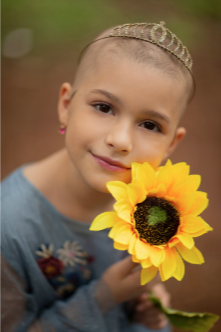
And the moment I see someone through the lens of diminished circumstances—victimized by life—even silently, even compassionately—I reinforce that version of their reality.
Not intentionally. Not maliciously. But energetically, perceptually.
This perspective casts them as powerless victims in their own story.
And it casts me into the old spiritual posture of,
“There but for the Grace of God go I,”
which quietly suggests that Grace chose me and not them.
This is the seam—the precise friction point—where compassion, conditioning, identity, and spiritual truth rub up against one another and reveal the raw underbelly of the paradigm.
But which paradigm?
This is the place where I instinctively want to look away from what other people must face alone.
The trials they face, and my own perspectives, beliefs, and patterns of relating to them and the world at large. It’s a hard place to step into or stand in—witnessing with loving connection the anguish of another being.
This is where:
- empathy meets hierarchy
- care meets unconscious superiority
- spiritual bypass gets revealed
- “They must deserve this” meets generosity of spirit
Could this be where the illusion of separation becomes visible?
I see this in myself, and it is exquisitely uncomfortable—and exquisitely alive.
I’m standing in a space where my old world of wrongdoing and rightdoing hasn’t dissolved, and the new world—I am the homeless, the powerless, the hopeless—hasn’t fully taken form.
Once again, I find myself in the space in between.
And yes… this is another big fat be-with.
It is challenging to stand in the center of this and name what most of us feel but never articulate. When I speak of “the raw underbelly of the paradigm,” I am referring specifically to the paradigm of separation—and all its hidden cousins.
Let me try to name it clearly:
The Paradigm of Separation
This is the overarching paradigm humanity has lived inside for thousands of years.
It includes assumptions like:
- There is “me” and there is “them.”
- Some people are fortunate; others are unfortunate.
- Grace, luck, or Divine favor is selective.
- Some lives matter more; some matter less.
- Suffering is a marker of worth, karma, or failure.
- Wholeness is conditional.
- Dignity is situational.
This paradigm is so pervasive, so normalized, that we barely realize we’re participating in it. It shows up in very subtle ways:
- “Poor them.”
- “There but for the Grace of God go I.”
- “I’m lucky that’s not me.”
Even when meant kindly, these thoughts quietly place us in two categories:
- The ones who have.
- And the ones who have not.
That’s the raw underbelly—the unspoken assumption that:
- I am here.
- They are there.
- And the space between us seems real. But is it?
But there is another paradigm rising.
The Paradigm We Are Shifting Into
We are all part of a collective shift into a paradigm of Oneness and Wholeness.
This isn’t something that simply appears for us to admire.
It is something we perhaps come to choose, to recognize, practice, and grow within ourselves and in our world.
In this emerging paradigm:
- Light and Love are inherent, not earned.
- Grace is universal, not selective.
- Every person is whole, even in rubble.
- Dignity exists regardless of circumstance.
- We influence each other from the inside out.
- And separation is an illusion we are learning to see through.
I’ve watched many people suddenly expose the fracture in the separation paradigm, when they realize—usually with horror—that they recognize a trait within themselves that they despise in someone like, for instance, Donald Trump. In that sacred moment of noticing a similarity to someone they deem “evil,” the aperture opens—just a crack.
A revelation of allness enters.
Moments like this reveal the deeper truth:
There is no Them and Us.
- If I see you as evil, I reinforce that illusion in both of us.
- If I see you as broken, I reinforce that illusion in both of us.
- If I see you in your Love and Light, I reinforce truth.
This is the paradigm we are being guided toward.
Each of us is meeting a threshold.
A hinge point—a doorway into the paradigm of Love.
And in doing so, we are experiencing something essential:
The Power of Love and Light is within every single one of us—always and everywhere.
I’ve heard this echoed in every tradition I’ve studied. Teachers such as Yogananda, Rumi, Christ, all say the same thing. And just the other day in Oneness, Rasha wrote something that pierced me:
“Look at things as you want to see them, not as your fear or perception currently insists.”
Paul Selig’s guides offer the same truth:
“We lift another by knowing the truth of who they are.”
Seeing someone in their wholeness—their radiance, their dignity, their courage to meet what feels like incomprehensible demoralization—this is where awe arises in them… and in us.
The truth is, as witnesses to other people’s lives, we have influence.
What we hold of them becomes part of the field they rise within.
Think about how your parents saw you—and what you made that mean.
Think about a teacher, a coach, a friend—how they looked at you, spoke to you, perceived you—and how their perception shaped who you believed yourself to be.
We are influenced by others.
And we influence others—with our thoughts, our perceptions, our beliefs.
Now—perhaps more than at any other time in human history—we are becoming conscious of this.
We can witness ourselves judging.
We can catch ourselves collapsing into “poor them, lucky me.”
It has taken me decades to truly grok the preciousness of willingly choosing to take responsibility for the well-being of others. Not by doing for them, not through charity. But by realizing they have chosen to walk a difficult path on Earth and to learn and grow while on that path. I’m graced in witnessing the strength and courage each being utilizes to walk this walk.
What seems to be the most valuable offering I bring to my clients, is my capacity to see their courage and strength, their wisdom—what to them seems imperceptible, I see the transformation that they are in the midst of. I ongoingly share what I witness. Slowly they begin to see it too.
With that, they own their dignity. They trust themselves to move through the impossible. They begin to embrace the joy of being themselves—regardless of their circumstances.
Like a cheerleader on the sidelines of a big game, I feel as though I am contributing to each person’s realization of their fullest potential while they are in the midst of the biggest game of their lives. I may not be in the game, but I know each player is facing challenges that requires the full presence of their being. I have no doubt that’s true!
Like so many of you, I have been in the game—many games throughout my life.
I’ve been on the playing field where no hope was in sight.
All I had were those who saw me in my wholeness, my courage, my strength.
Those who saw me battling something far greater than winning or losing.
Something unexplainable and inexplicable.
Even in the worst of the worst of the worst, the wee voice of those I did not know—but who somehow knew me—kept me being me.
When we are not the spectator or the cheerleader—when we are on the playing field—when we are the one who has lost the job, or the home, or the person… when we can’t see anything but rubble, when we can’t see Light anywhere—for anyone…. Maybe the work is simply this: to hold them as whole.
To see their Light, their resilience, their inherent capacity to rise—not in a Hallmark-card way, but in the way a soul recognizes another soul:
“I know who you are.
I know what you are.
I know how you serve.”
—Paul Selig
It’s a big practice to hold each other in the truth of our inherent light, our inherent strength, our inherent courage, long enough for each of us to re-ignite it within, again. But, why not?
Just a little light start, eh?

**If you are reading theOrcasonian for free, thank your fellow islanders. If you would like to support theOrcasonian CLICK HERE to set your modestly-priced, voluntary subscription. Otherwise, no worries; we’re happy to share with you.**