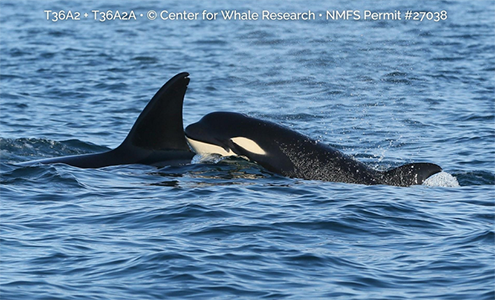
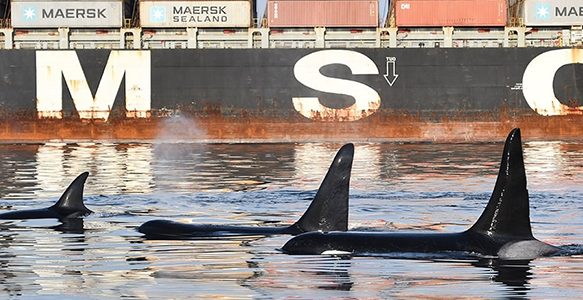
Rising marine noise as shipping increases is one key cause of the dangerous decline in the southern resident killer whale population.
||| FROM THE TYEE |||
In March, nearly three dozen scientists gathered over three days in Vancouver with a single focus — to evaluate the state of the southern resident killer whale and figure out how to prevent its likely extinction.
Today they issued their report, “Strengthening Recovery Actions for Southern Resident Killer Whales.” It contains a detailed road map, including 26 recommendations, to reverse the population decline that has continued even though the whales have been on Canada’s endangered species list for the past 20 years.
While the report also offers suggestions for further research, most of its recommendations can be implemented now, Jeffery Young, a senior science and policy analyst with the David Suzuki Foundation, told The Tyee.
“We know what we need to do,” said Young, who studies policy and recovery initiatives for salmon, the killer whales’ main food source. “Dealing with noise, dealing with prey, dealing with contaminants — the control is in our hands. We actually can do this and remove these threats, or reduce these threats, to a level that we think would support their recovery.”
It’s been 50 years since researchers began taking an annual census of southern resident killer whales, a distinct species that is socially and biologically isolated from other orcas and ranges from southern Vancouver Island to northern California. The southern resident killer whale is listed as endangered under Canada’s Species at Risk Act and the United States’ Endangered Species Act.
The population was, by some estimates, historically more than 200 individuals. By 1976, shooting the marine mammals and capturing them for tourist parks, along with falling food sources, had brought their number down to 72.
Once the captures and shootings stopped, their numbers began to rebound. The population peaked at 98 whales in the mid-1990s.
But then began a gradual decline over the decades that followed.
The most recent census found 73 southern resident killer whales. Of those, 22 were observed to be in poor condition. Since then, there have been four births. Two of the new arrivals and one adult have since died, today’s report says.
The population has a “high probability of extinction” under current conditions, according to the report.

**If you are reading theOrcasonian for free, thank your fellow islanders. If you would like to support theOrcasonian CLICK HERE to set your modestly-priced, voluntary subscription. Otherwise, no worries; we’re happy to share with you.**